Travel Then and Now
A story of an obsession, and how travel changed around it (1979–2022)
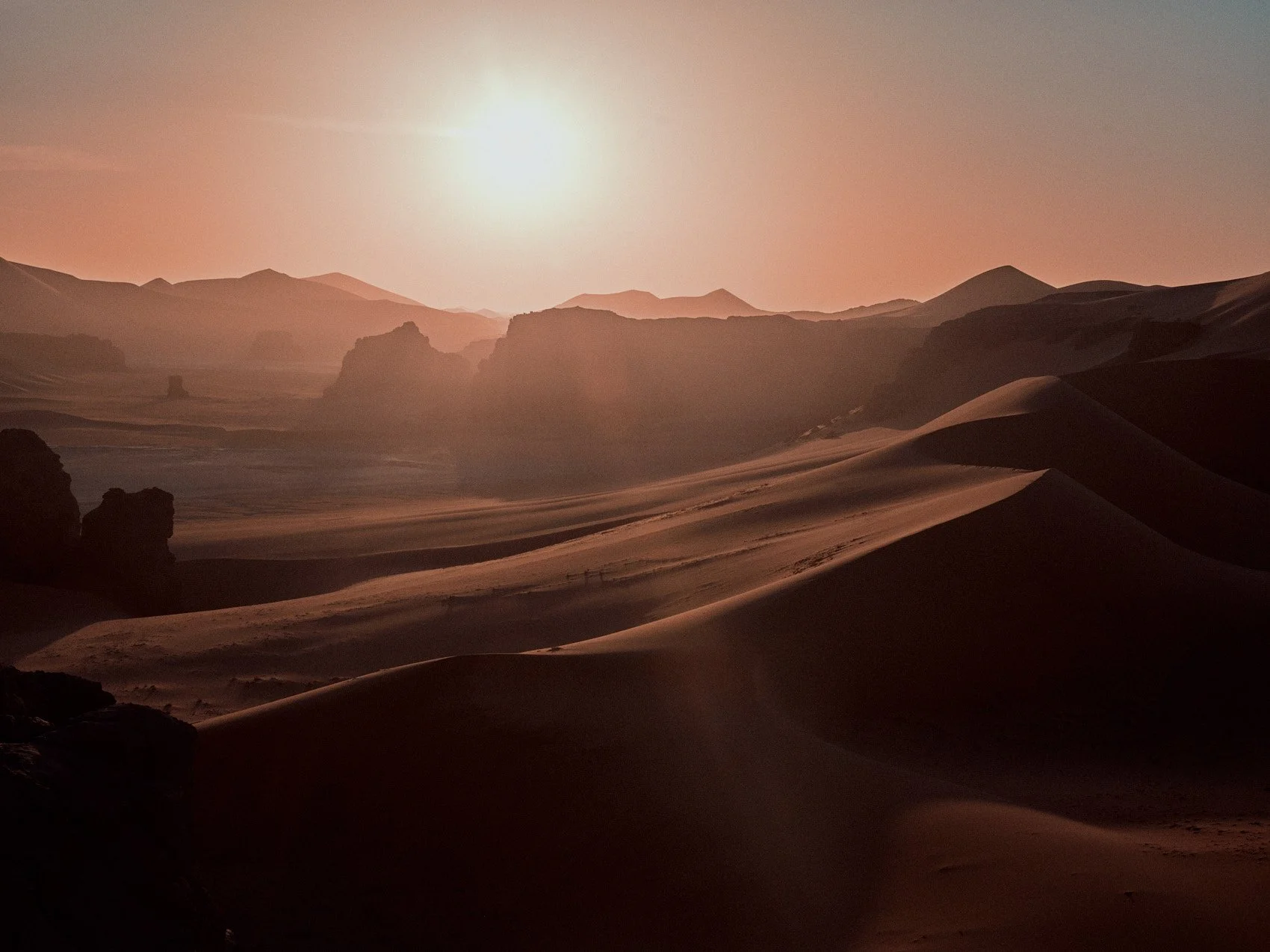
1979
I can pinpoint the exact moment it began.
I came home from school to find a khaki expedition Land Rover parked on the drive, and in the kitchen a man with a black, bushy beard testing his watch for waterproofness in the sink. My uncle John, a National Geographic photographer, had stopped by on his way to cross the Sahara Desert. I was thirteen and hadn’t been further than Wales.
This was the late 1970s, when men who fancied your mum were called “uncle,” and trans‑saharan travel was in a golden age.
After he returned, he gave a slideshow of his photographs at my school. As the carousel clicked through — set to Here Comes the Sun — I saw landscapes and characters so otherworldly that I shed a tear.
Year by year, I built an intensely private vision from the expanse of khaki in my atlas. I dreamed of travelling to Tamanrasset, Djanet, the Ténéré, and Timbuktu. I imagined nights under desert skies with the Tuareg, and smoking Kif with Berbers in the Rif Mountains of Morocco.
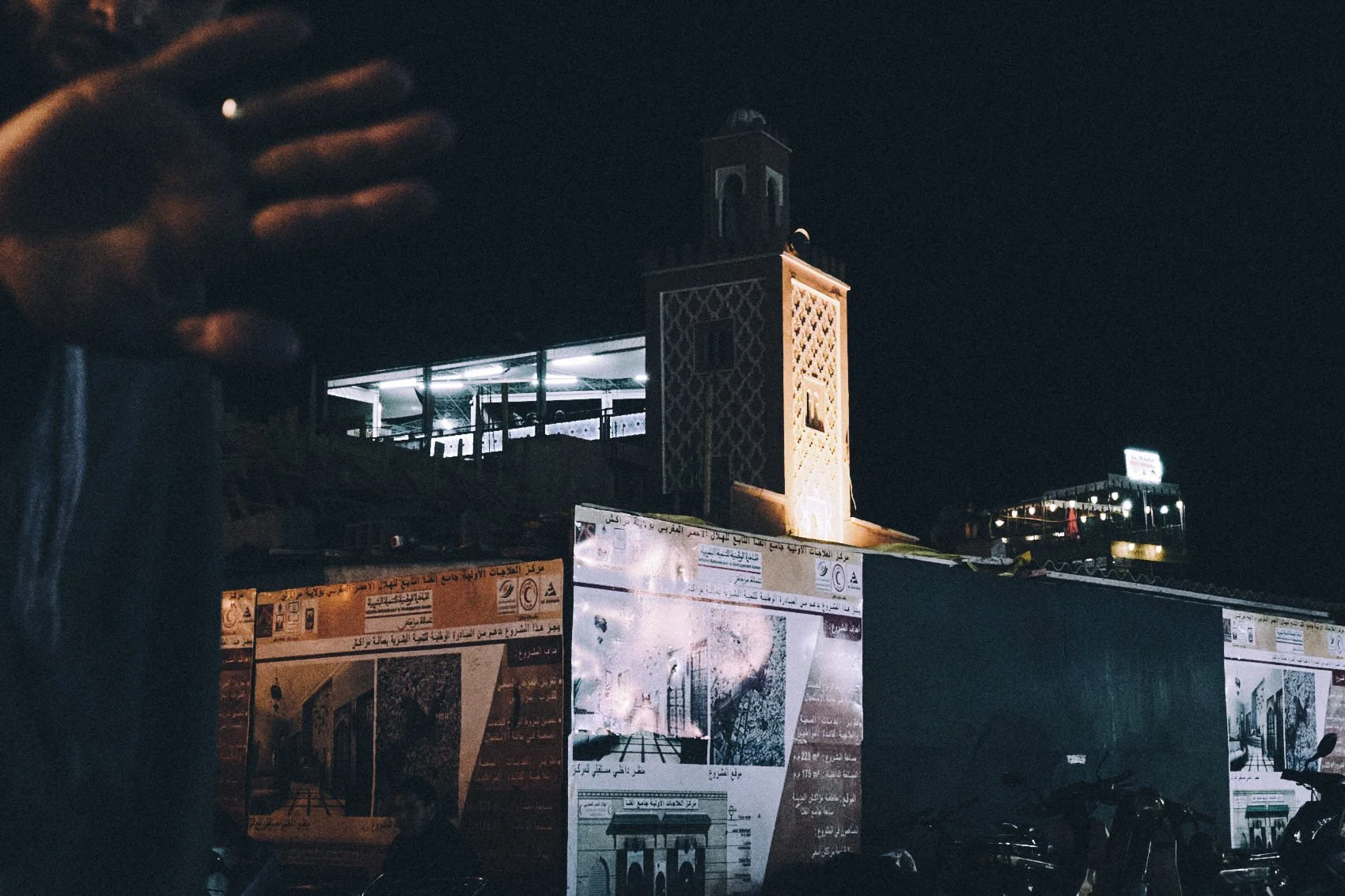
1987
At twenty‑one, I persuaded my girlfriend to go to Morocco — which felt like the only way to reach the Sahara. Rough Guide in hand, we flew to Tangier, stayed at the Hotel Muniria, drank at the Tangerinn, and ate swordfish at a little restaurant by the harbour. On a quiet street, a shopkeeper beckoned us in, then hissed “fuck the tourist” as we passed.
The deeper we travelled into Morocco, the more we felt like prey in a Paul Bowles story: western travellers, ignorant of local ways, disoriented by an environment whose amorality we didn’t understand.
In a restaurant, a man trying to sell a lump of hashish set upon me before being ejected into the street by waiters, wild‑west style.
In Fez, staying in a hotel watched by the same men who had installed us there from the train, we thought — after finding the windows to our room open — that drugs had been planted in our bags, a scam we’d heard about by other travellers. We fled the city at 5 a.m.
While Yves Saint Laurent was languishing at Jardin Majorelle, we were caught inside the maze-like medina in Marrakesh with a “guide,” who demanded more money to get us out.
We reached Zagora—the last outpost before the Sahara Desert—in the grip of 50°C-degree heat and mounting paranoia.
We met a man called Mbark, who bought us mint tea and said he wanted to take us to the desert. We followed him across a stony plain, braced for trouble, but he led us instead to his brother’s rooftop, where we ate under a clear desert sky.
At 5 a.m. he rang our room “Are you coming to the desert?.” We told him we were unwell.
As the bus pulled out of Zagora, he waved it down, stepped aboard and placed two silver bracelets in our hands.
We left Morocco without seeing the desert.
Travel, I learned, was a rite of passage.
2018
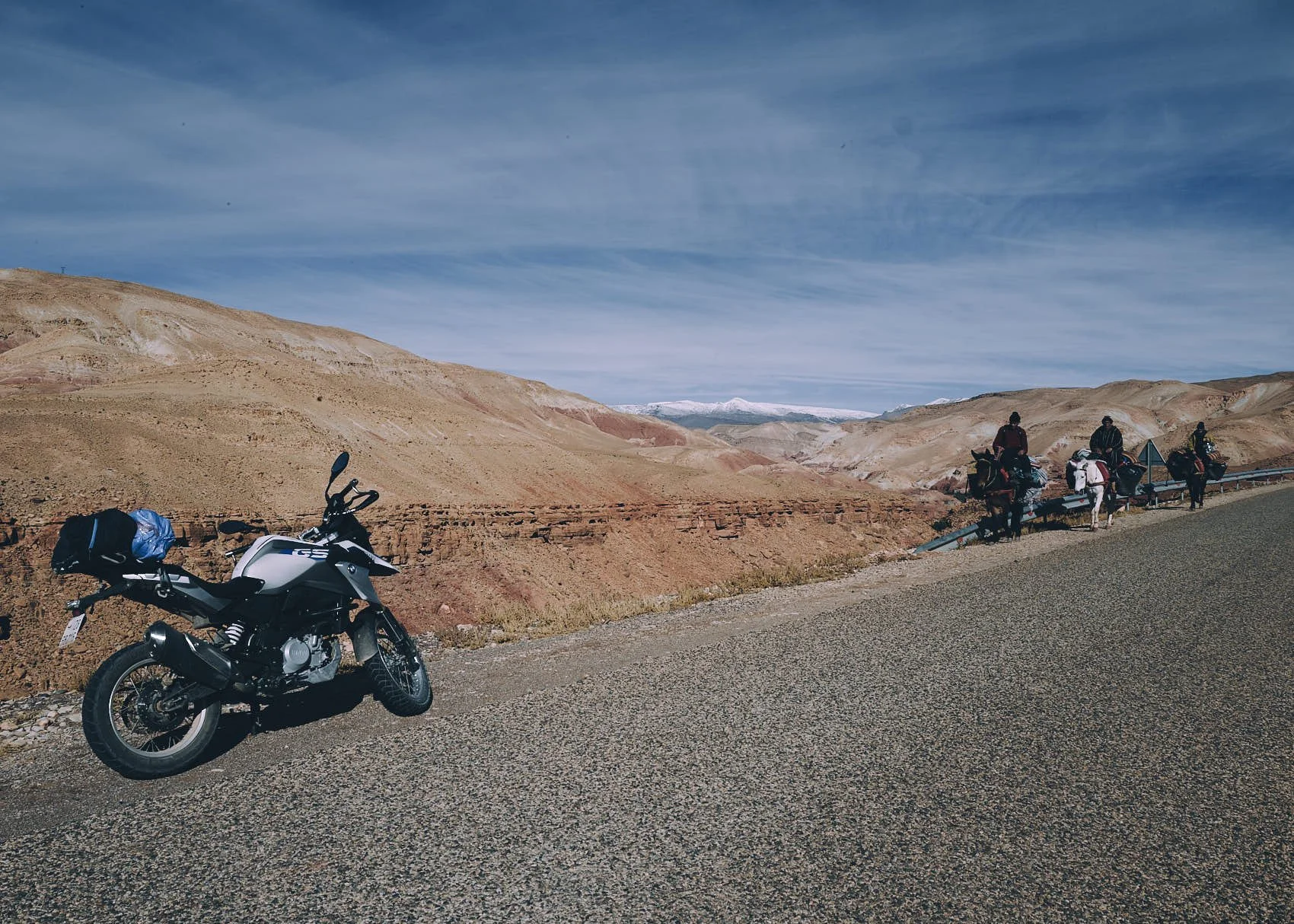
Lured back to Morocco for a motorcycle tour along the edges of the Sahara, I found myself in an affable restaurant in the Marrakesh medina, surrounded by influencers in floppy hats filming their food.
There are still snakes and storytellers at the Jemaa el‑Fnaa, but the swarms of children trying to pick pockets had gone. You could wander past chic boutiques, spas and the new Maison de la Photographie without being dragged into a hostile choreography with hustlers.
The chaos that once terrified me is now tidied into a gentrified tourist hub. A taxi took me straight to my pre‑booked hotel — a far cry from the days when I wandered the streets fending off men trying to grab my girlfriend, only to discover the guidebook was out of date and the hotel had closed down.
The mystique I’d once sought here was always hidden behind walls and courtyards, or perhaps only existed in the 1950s, on the pages of Elias Canetti, Mohammed Mrabet, and Paul Bowles.
From Marrakesh I rode south with Chris Scott, over the Atlas and into Morocco’s Saharan frontier near the Algerian border. We travelled along empty desert roads, sipped mint tea at roadside cafés and stayed in Bedouin‑run auberges with open fires. Ouarzazate seemed like a city now, compared to the outpost I’d known three decades earlier. I brought home a black‑and‑white Berber rug strapped to the back of my hired motorcycle; it now sits on the floor of my study.
2022
My boyhood obsession with the Sahara had settled into the background years ago. And then, scrolling through Instagram one evening, I found the profile of a Polish woman who had close ties to the Tuareg. We exchanged a few messages. It felt improbable, almost naïve — the kind of thing only a thirteen‑year‑old would believe in.
Weeks later, I was flying to Algeria.
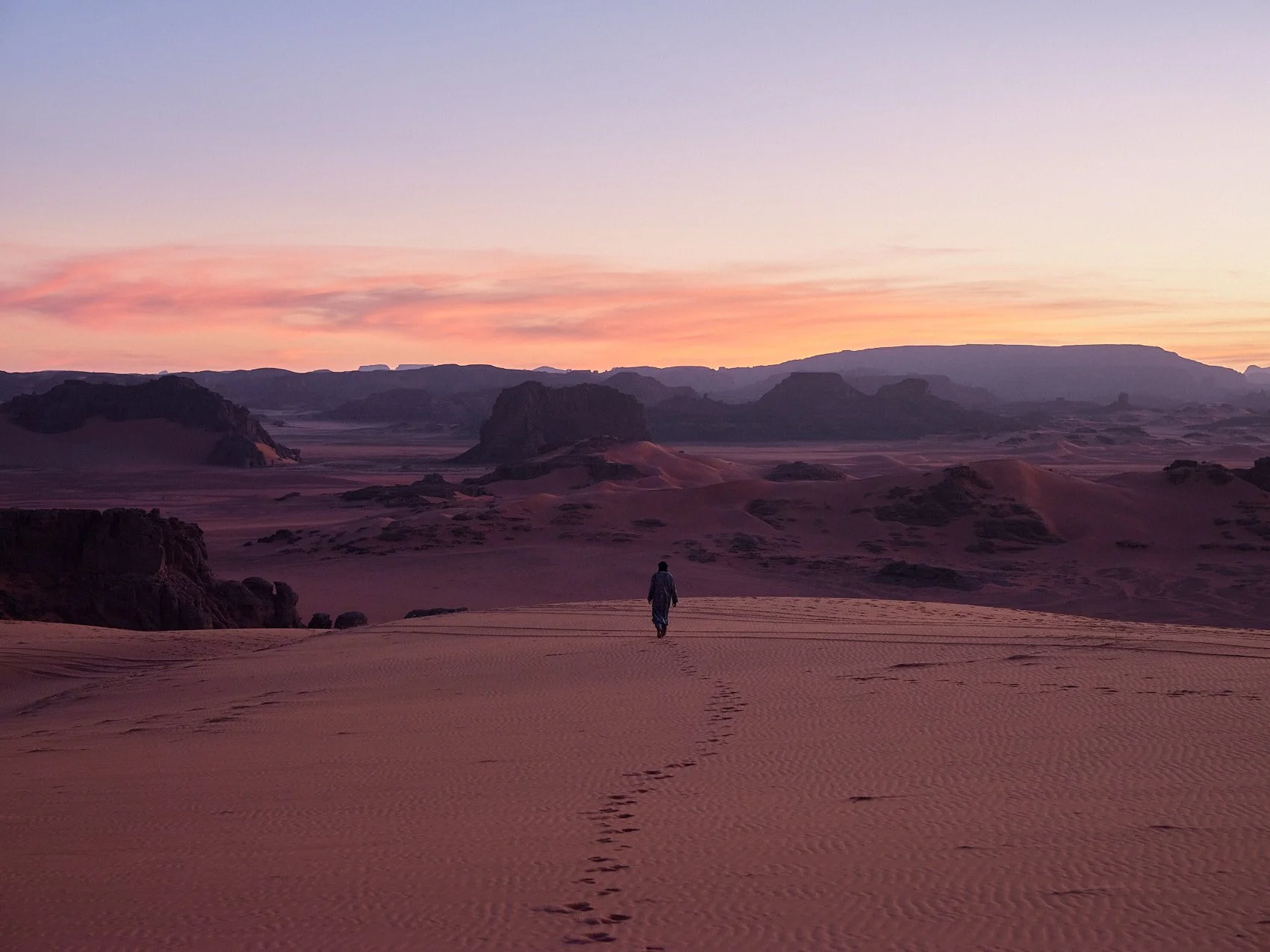
Tito, a veiled Tuareg guide, met us with drivers, a cook and musicians, and led us into the desert in Toyota 4x4s. We travelled under luminous North African skies, listening to Tuareg laughter and music around the glow of the fire at night.
The Sahara I found there had no paranoia, just an elemental landscape that worked its way into my consciousness. Around every corner lay a startling new arrangement of sand, sky, and rock, which I never tired of.
The dream I’d carried for decades arrived without ceremony — as if it had been waiting for me all along.
2026
Travel is easier now, it may have lost some of its shadows, but I don’t mind.