Lost on Iona
Scotland’s Holy Island is the perfect place to search for serenity — just remember to pack your waterproofs.
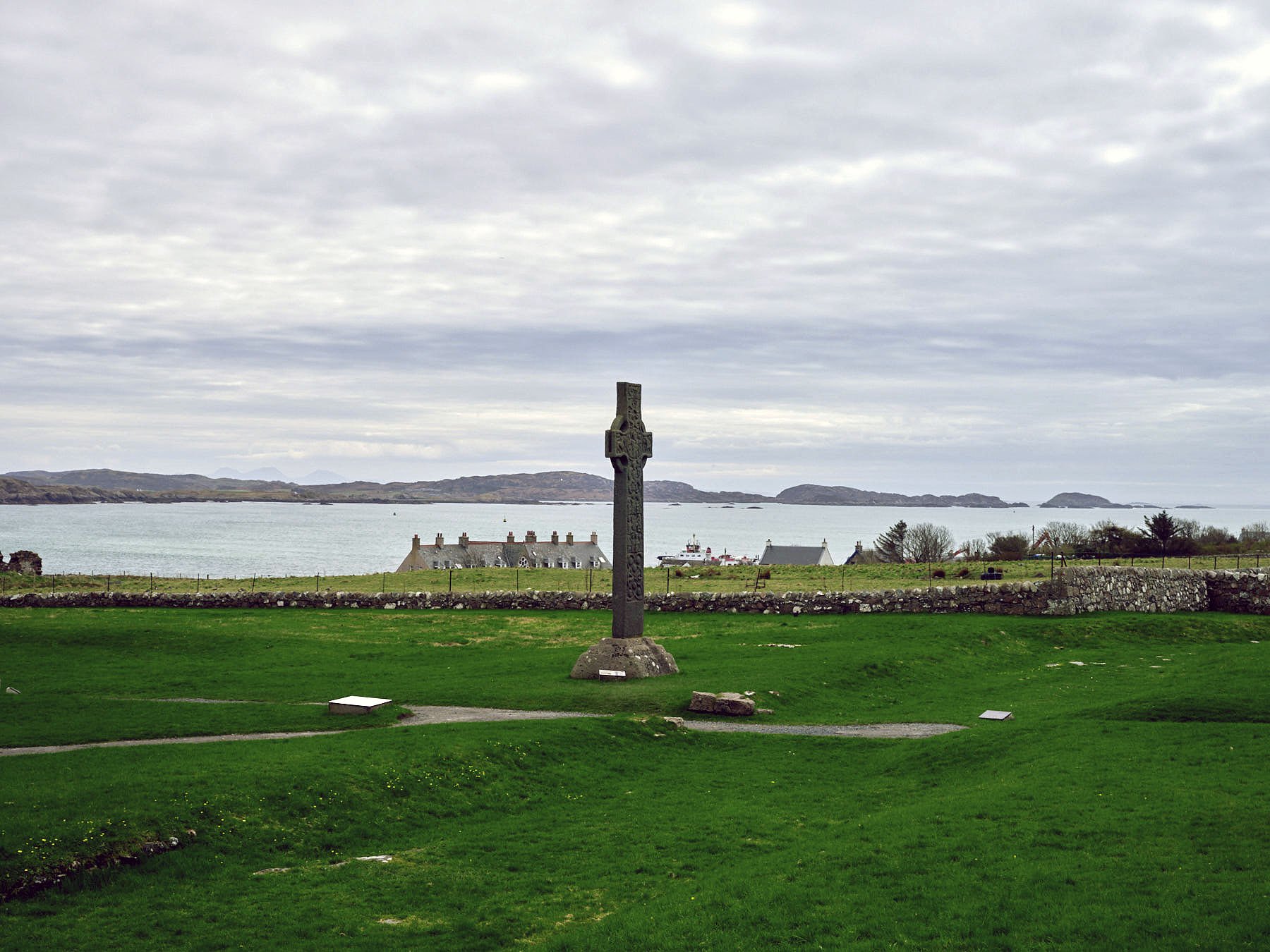
I board the early morning ferry from Mull to Iona with three young monks—among the first to have returned to Iona since the Abbey was restored. After the 5 minute crossing of the Sound of Iona, the ferry delivers us into the calming embrace of the island where Christianity first took root in Scotland, founded by St Columba in 563 AD.
Legend still clings to these Hebridean waters. St Columba was said to have a voice so powerful he could stand at the edge of his monastery and call across the Sound to the ferryman at Fionnphort. As the monks beside me fall into quiet conversation, it’s hard to imagine that booming summons echoing over the tide.
I saunter towards the Abbey in early-season sunshine, through the village of Baile Mor, the only settlement of any note on the island. The narrow road is framed by a row of terraced houses with neat gardens that lead down to the shore. Taking tea in the garden of the Argyll Hotel,I watch a man on the jetty manoeuvring an elderly woman into a motorised dinghy. As they take off across the Sound of Iona, I entertain dreams of island life.


Founded by Saint Columba in 563AD, Iona Abbey is one of the most sacred places in Scotland.
Today, 1462 years later, wandering in the hallowed atmosphere of the cloisters, it’s easy to enter the territory of the ineffable: the stuff we can't express because we can’t find the words.
There is a name for spaces such as this: ‘thin places’, a Celtic Christian term for those rare places where the ‘distance between heaven and Earth collapses’.
The people you meet at places like this are not seeking such grand experiences, but are often in their own way ‘thin’ too: their barriers are down and they are open to new experiences.
I set off on a quest to find the Hermit’s Cell, rumoured to be the place where St Columba came for solitary reflection.
The site lies somewhere near Dùn I, the highest point on Iona, though no marked routes lead you there. After two hours peering into every crevice that looks even vaguely like a cave, I stop on the pathless, boggy moor and realise I’m lost. Then the heavens open. Soaked and jacket‑less, I slog back through a waterlogged field until an affable farmer points me towards the road, reassuring me that “tourists are forever getting lost here”.
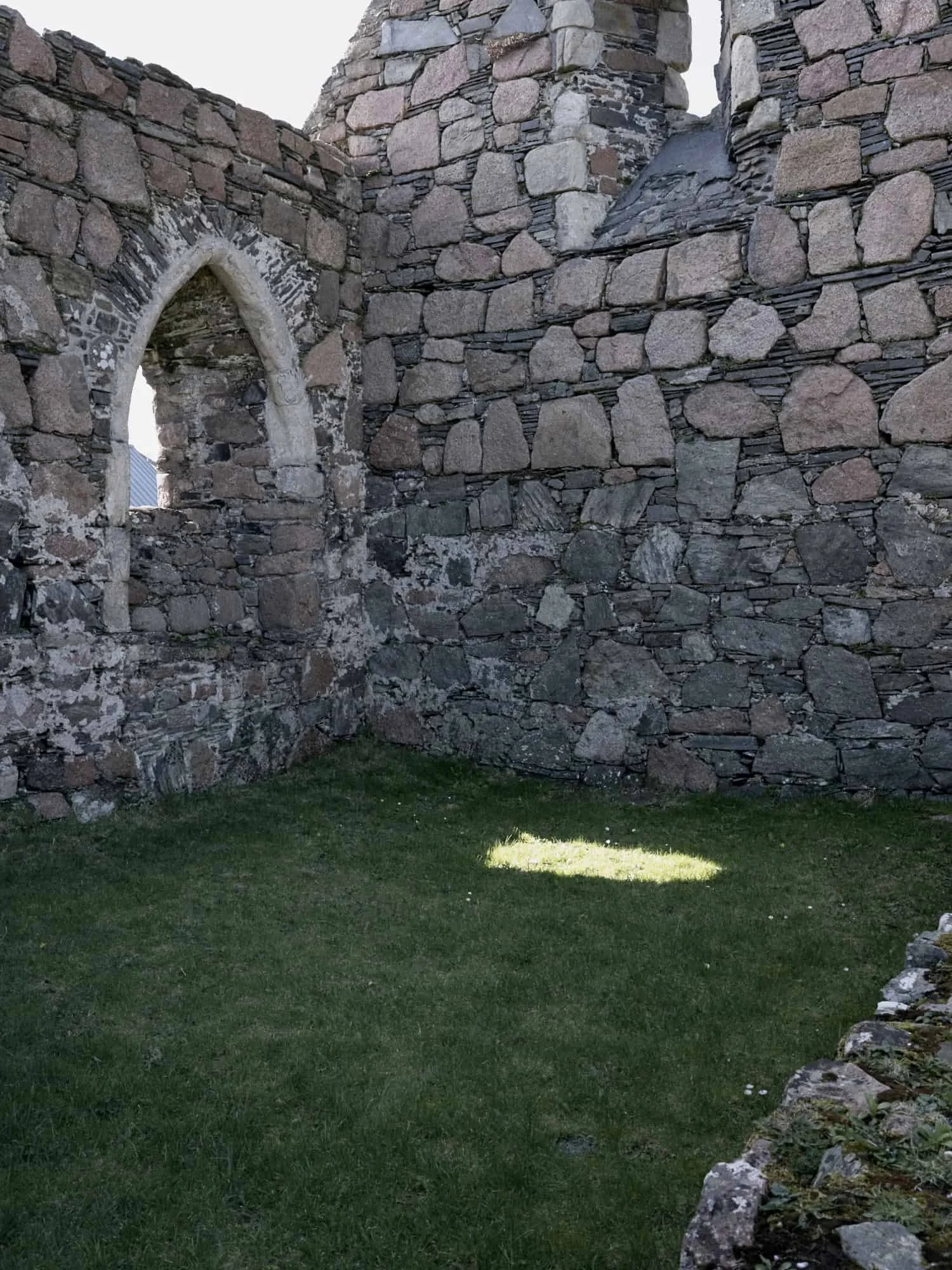
I stop for a bowl of Cullen Skink—smoked haddock, leek and potato soup—at the St Columba, a hotel with its own vegetable garden and panoramic views over the island. Sara, the waitress, glances at my soaked boots and tells me I probably walked straight past the Hermit’s Cell without realising; it’s a circle of ruined stones, not the cave I’d conjured up in my imagination.
I wander back to the jetty through the ruins of the Benedictine nunnery, the ancient stones catching the soft afternoon light, before taking the ferry back to Mull.
Like most visitors, I’m drawn to Iona by a mixture of history, myth and geography. It seems fitting that not everything on Iona is easy to find.

TRAVEL BRIEFING
Getting to Iona
Take the foot‑passenger ferry from Fionnphort on Mull (10 minutes). Cars aren’t allowed on Iona, which keeps the island quiet. Ferries run frequently — you can book with CalMac, but turning up at the jetty works too. West Coast Motors run buses from Craignure to Fionnphort, where you’ll also find parking, a café, and a small grocery store.
Getting Around
Walking is best. Bicycles are available to hire.
Visit
Iona Abbey. Founded in AD563 by Irish monk Saint Columba, the restored abbey stands as the spiritual heart of the island.
Iona Nunnery. An ivy-clad pink granite ruin: a rare example of a medieval nunnery in Scotland, established around 1200.
St Columba’s Bay. An evocative southern bay where St Columba landed his boat in 563AD to bring Christianity to Scotland.
Reilig Odhrain. A small Chapel with wonderful acoustics and a peaceful atmosphere with just candle light inside.
Dùn I. The highest point on Iona, with sweeping views over Mull, the Treshnish Isles, and on clear days, all the way to Skye.
The Well of Eternal Youth. A natural pool in the cleft of rocks just below the Cairn on Dùn I Dun. Celtic Myth says that St Brigid of Ireland blessed the pool in 6th Century to bring renewal to those seeking a new beginning in their lives.
Stay
St Columba Hotel — Overlooking the Abbey and the Sound of Iona, this former manse offers sweeping sea views.
Iona Pods — Simple, eco-friendly cabins in a peaceful setting near the Abbey.
Eat
Argyll Hotel Restaurant— Local produce, the restaurant opens onto a garden with wide views over the Sound of Iona.
St Columba Hotel— Set in gardens overlooking the Abbey and the sea. Organic, home-grown and locally sourced food.
Ailidh — An artisan takeaway and micro-bakery. Freshly made Neapolitan pizza that you can takeaway and each by the beach.
Retreat
The Iona Community Retreats. Run by the ecumenical Iona Community, these residential weeks take place at Iona Abbey (and formerly at the MacLeod Centre).
Spirit of Iona. A week-long group retreat run by the Findhorn Foundation hosted at the remote Traigh Bhan house.
Argyll Hotel. Hosts writing and art retreats in a wonderful location looking over the Sound of Iona.