Wonders of Art in the American West
Itinerary Ideas: from Land Art to High Desert Minimalism
The American West has long inspired monumental art. Distances are great, and access to certain artworks is complex, so it’s worth planning a road trip carefully.
UTAH AND NEVADA DESERTS
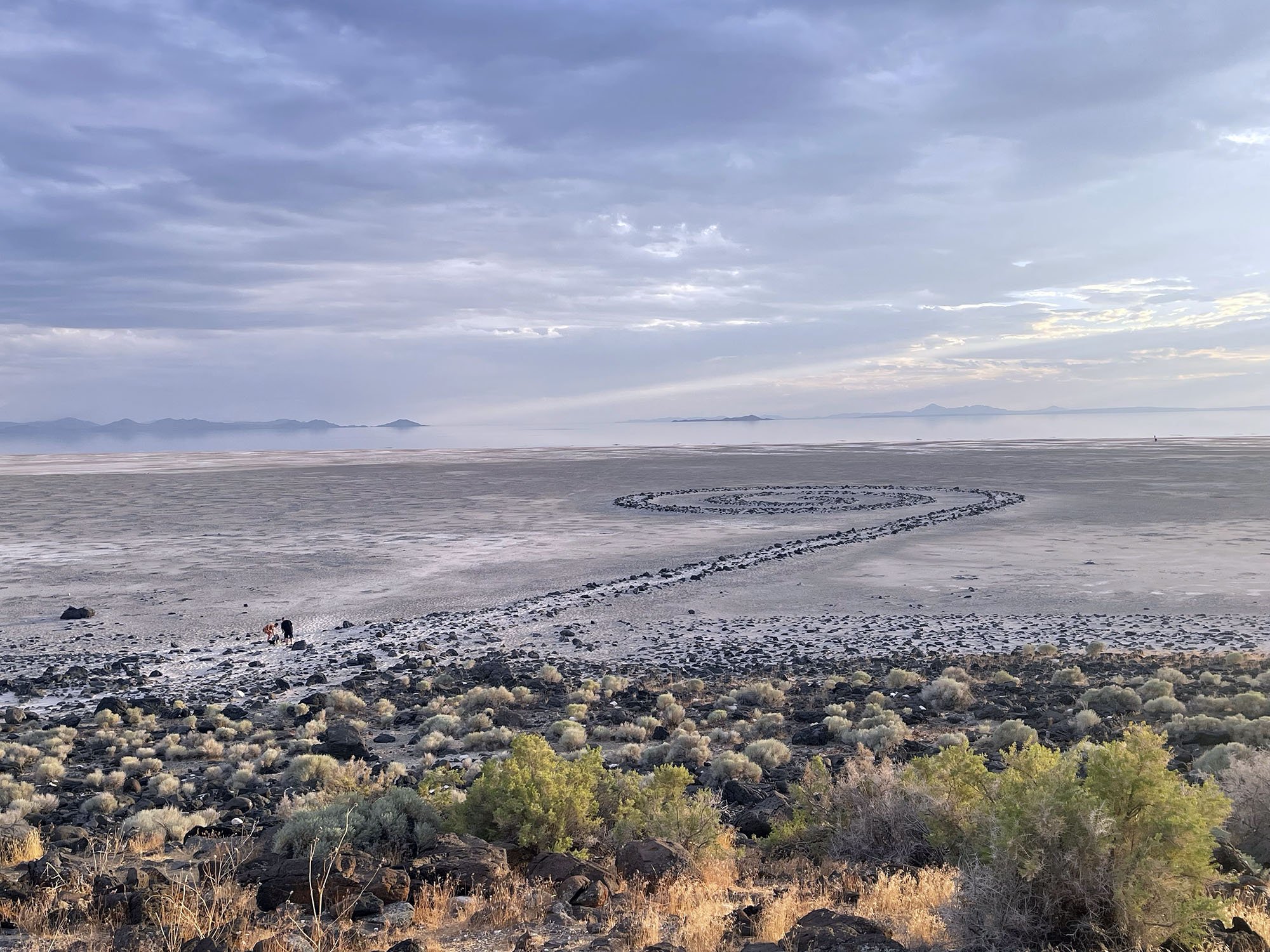
Spiral Jetty by Robert Smithson
Northwestern Utah
Spiral Jetty is a monumental earthwork sculpture created by American artist Robert Smithson in April 1970. Widely considered the most influential masterpiece of the Land Art movement, the installation consists of a 1,500-foot-long, 15-foot-wide spiral that juts out into the northeastern shore of the Great Salt Lake at Rozel Point, Utah.
For me, Spiral Jetty is an artwork so enthralling that it was a key reason to visit Utah. The location evokes a primordial sea; the artwork is influenced by neolithic art and science fiction, and is subject to the elements rather than preserved statically in a museum. The Salt Lake itself makes for a mesmerising walk.
Robert Smithson was married to the artist Nancy Holt, whose work Sun Tunnels lies in the same area of northwestern Utah.
-
Admission: Free. Open 24/7, 365 days a year.
Visitors must practice Leave No Trace principles, pack out all trash, there is a designated car park.
Location: Spiral Jetty sits on the northeastern shore of the Great Salt Lake at Rozel Point, Utah. It a 2.5-hour drive northwest from Salt Lake City.
There are no bathrooms, water, food, or fuel at the installation. The nearest full services are located 45 minutes away in Corinne, Utah (last fuel), or at the Golden Spike Visitor centre (last toilets, open during specific day hours).
Getting There: Access is by vehicle, the final 15 miles consist of unpaved, unmaintained gravel and dirt roads. I drove in an SUV and no problems in summer. Spiral Jetty is on Google Maps, and sees regular traffic. Detailed directions and updates at diaart.org
Dia Art Foundation for artwork details and directions
holtsmithsonfoundation.org for further reading
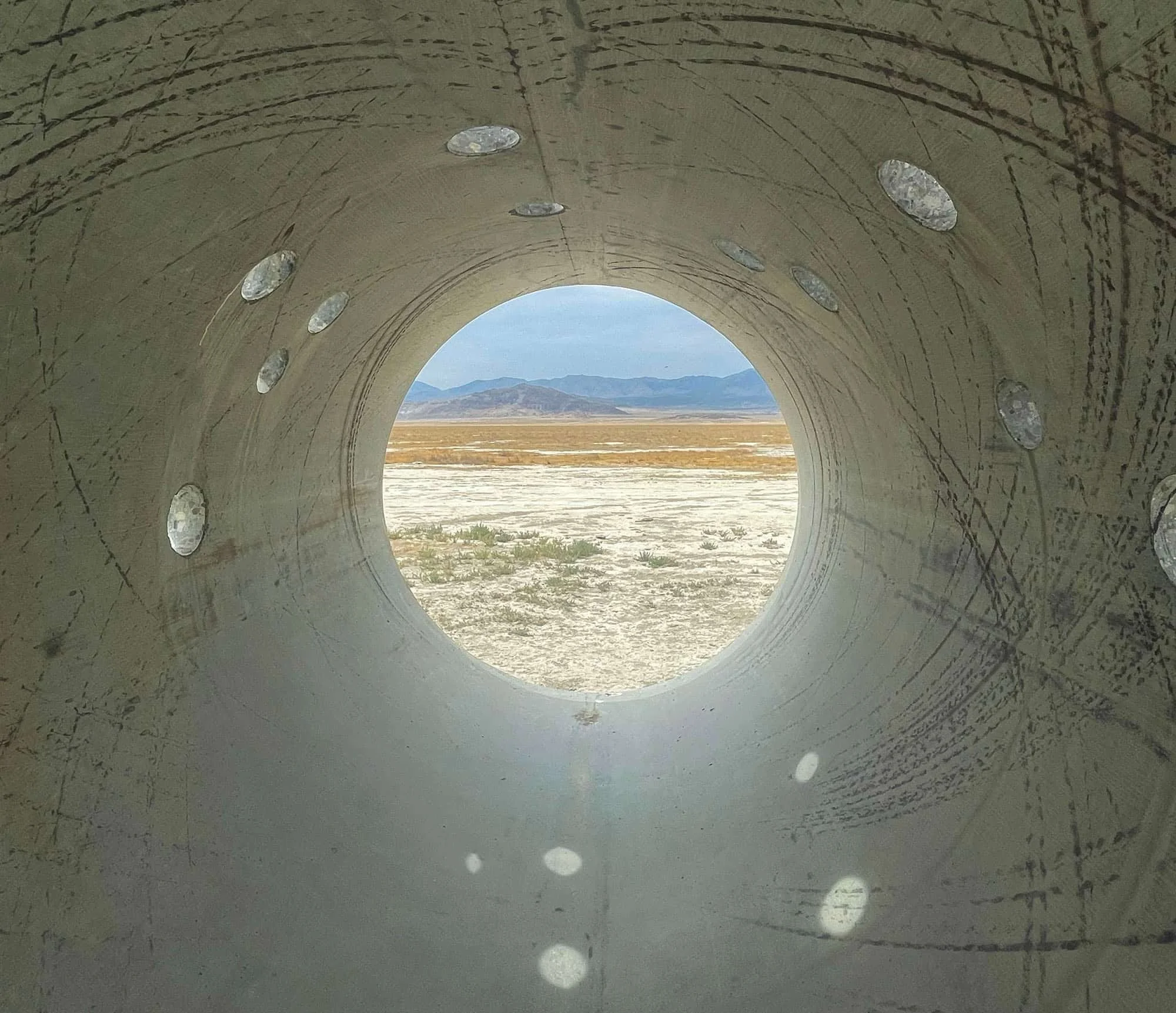
Sun Tunnels by Nancy Holt
Northwestern Utah
Sun Tunnels is an enigmatic sculpture in a quiet desert landscape in northwestern Utah. It comprises four large concrete cylinders arranged in an X-formation, positioned to frame the sun as it rises and sets at the solstices. Desert sunlight pours in through the holes in the tunnels in an echo of the celestial pattern above.
To me, Sun Tunnels is compelling because of its neolithic influence while being unmistakably a product of late 20th-century industrial America.
Nancy Holt was one of the key figures in the Land Art movement in the 1960s and 1970s, along with her husband Robert Smithson, whose work Spiral Jetty lies in the same area of northwestern Utah.
-
Admission Free. Open 24/7, 365 days a year.
Visitors must practice Leave No Trace principles, pack out all trash, and park in designated areas.
Location:Sun Tunnels sits on a 40-acre plot of open desert valley, situated roughly 4 miles from the ghost town of Lucin, Utah. A 4-hour drive from Salt Lake City.
There are no bathrooms, water, food, or fuel at the installation. The nearest services are located 45 minutes away in Montello, Nevada.
Getting There: Access is by vehicle, the journey mimics the ritualistic travel associated with ancient sacred sites. I drove in an SUV from Wendover and had no problems on the dirt roads in summer. Sun Tunnels is on Google Maps and directions can be found at diaart.org
diaart.org for directions
holtsmithsonfoundation.org for further reading
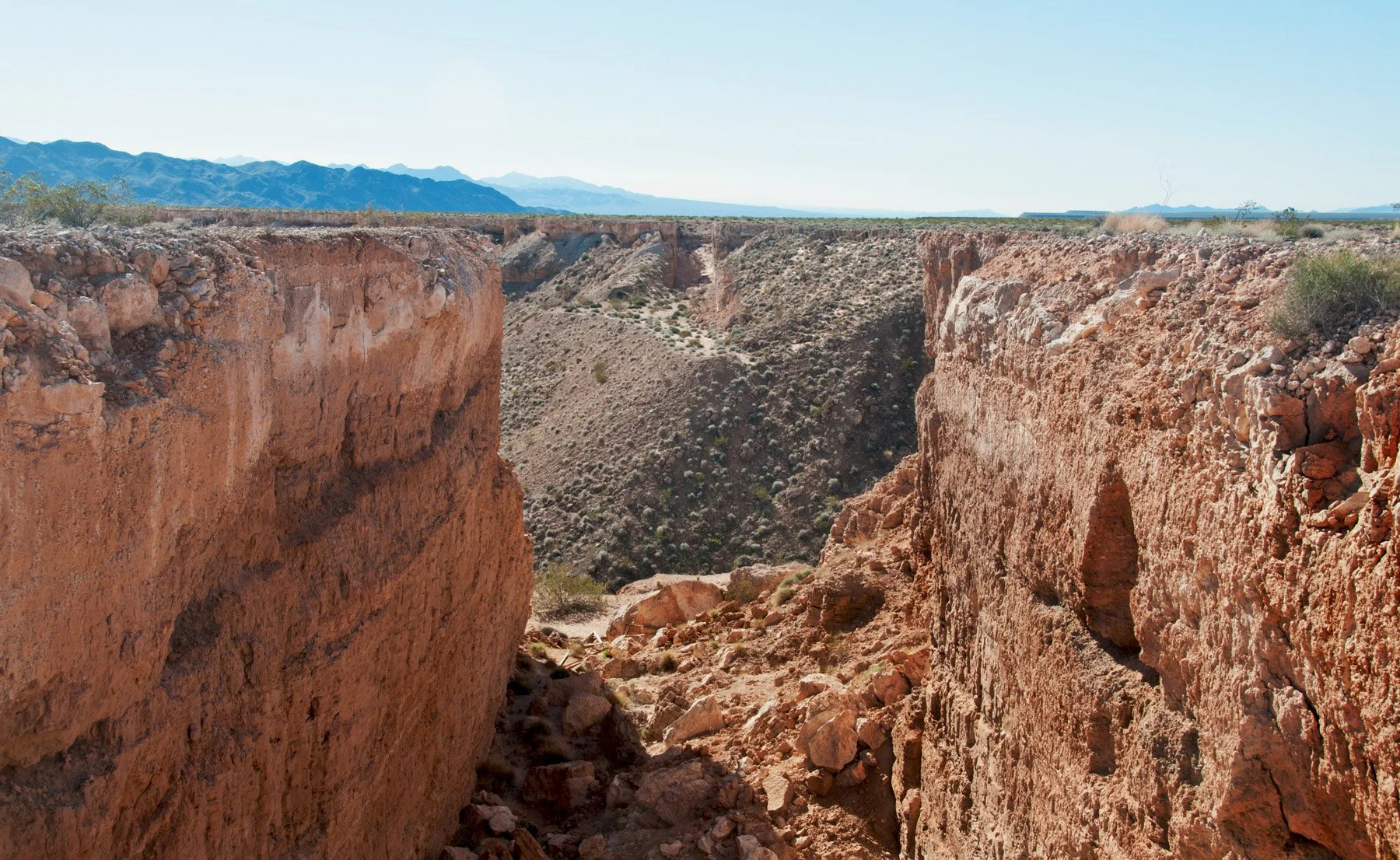
Double Negative. Photograph by Thure Johnson, licensed under CC BY 2.0. Source: Wikimedia Commons.
Double Negative by Michael Heizer
Nevada
A monumental piece of Land Art created by artist Michael Heizer in 1969–70. Located on Mormon Mesa near Overton, Nevada, it consists of two massive trenches blasted and bulldozed directly into the desert plateau.
The artwork is an “environmental sculpture” built entirely out of negative space. As Heizer famously noted, “There is nothing there, yet it is still a sculpture”. The artwork was acquired by the Museum of Contemporary Art, Los Angeles (MOCA) in 1985.
Visiting Double Negative is something of an expedition, so I didn’t see it on this trip. This information is sourced from MOCA.
-
Admission Free. Open 24/7, 365 days a year.
Visitors must practice Leave No Trace principles, and pack out all trash.
Location: Mormon Mesa, Moapa Valley, Nevada (roughly 80 miles northeast of Las Vegas.
Getting There Double Negative requires something of a pilgrimage to reach. You need a 4×4 and the patience to follow the artists own directions, which can be found at Double Negative .
Travel Warning: Reaching the site requires traversing unpaved, rocky dirt roads. Visitors are urged by MOCA to use a high-clearance, four-wheel-drive vehicle and pack emergency supplies like extra water and a spare tire.
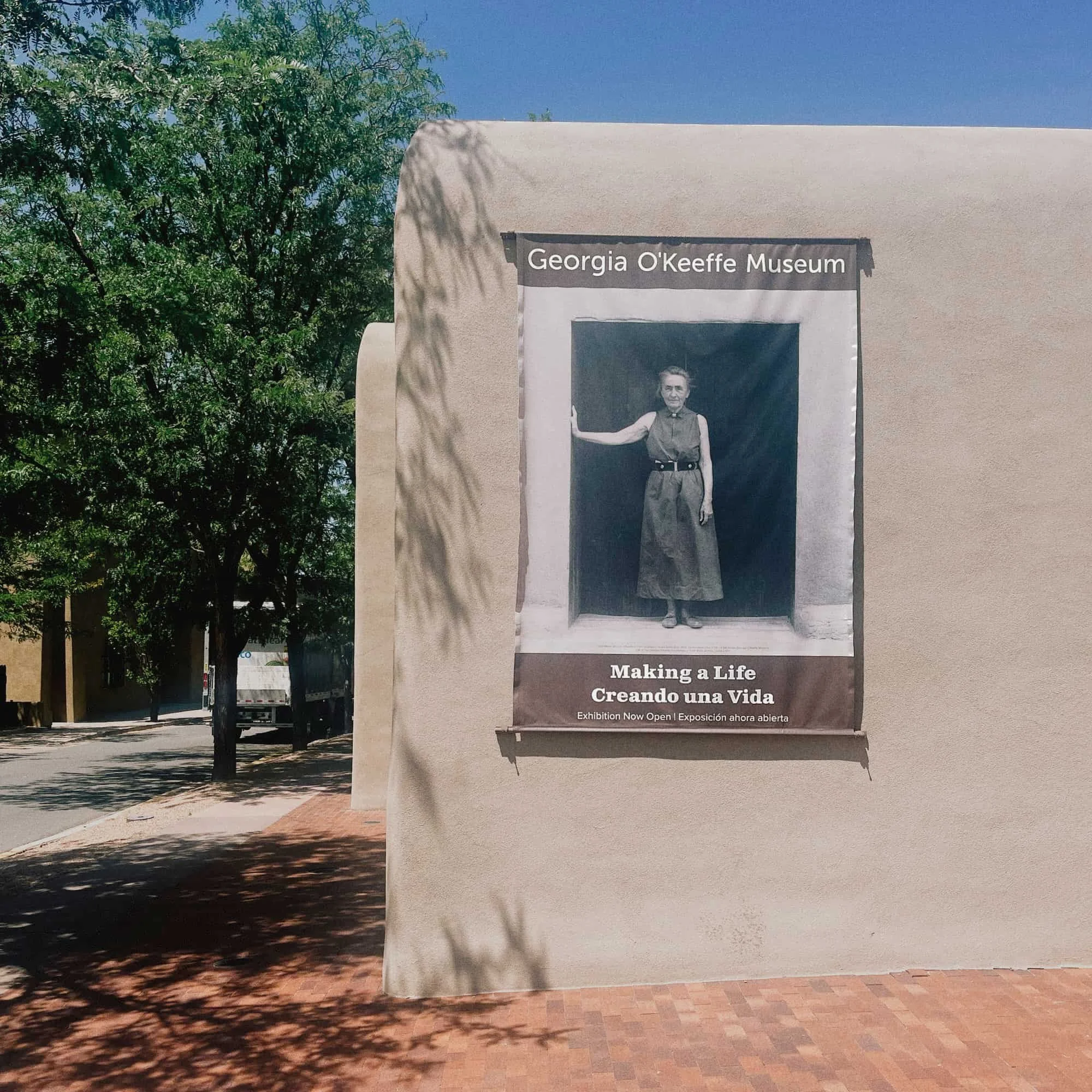
The Georgia O'Keeffe Museum
Santa Fe, New Mexico
A museum dedicated to the life and artistic legacy of American modernist icon Georgia O’Keeffe, housing the single largest repository of her work in the world. The museum goes beyond standard art collections by preserving her personal belongings. Seeing her actual sketching materials, clothing, and everyday items adds an approachable, human element to a larger-than-life art icon.
I found this museum a delight to visit, amid coffee shops, restaurants, and contemporary art galleries, in my favourite city in the USA.
-
Admission: $22 for adults. Free for children and youth aged 17 and under.
Free Access: Free for everyone on the First Friday of each month from 5:00 PM to 7:00 PM.
Location: 217 Johnson St, Santa Fe, NM 87501 (tucked right into the historic downtown district).
Getting There: Central and highly accessible by walking from the Santa Fe Plaza. Because there is no on-site public parking, you can drop passengers at the front before parking in a nearby city garage or at a public meter.
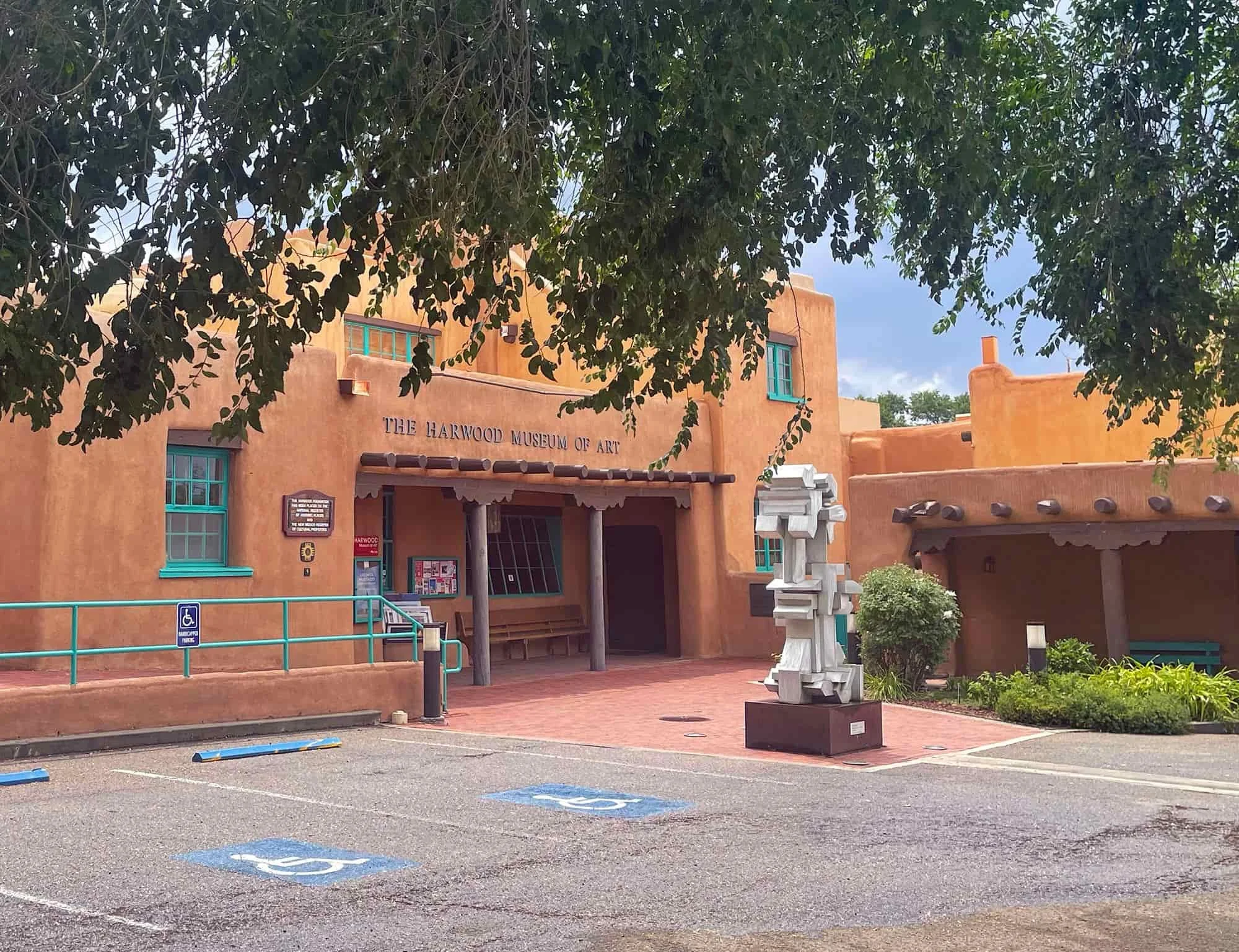
Agnes Martin at The Harwood Museum
Taos, New Mexico
Inside the Harwood Museum of Art in Taos, New Mexico, is a world-renowned, permanent installation of seven abstract paintings gifted by the artist. Often compared in its spiritual ambience to the Rothko Chapel, it is the only permanent museum environment in the world specifically designed in collaboration with Martin to house her work.
As a big admirer of Agnes Martin’s work, this was a rewarding place to experience.
The museum also has a strong photography collection (Ansel Adams, Edward Curtis and William Henry Jackson) alongside its extensive holdings of Taos modernists and Indigenous American artists.
Taos is a 1.30hr drive from Santa Fe.
-
Admission: $10 for adults ($8 for seniors aged 65+ and students). Free for children and youth aged 17.
Location: 238 Ledoux St, Taos, NM 87571 (situated on a historic street just west of the main town area).
Getting There: Central and highly accessible by taking a short, scenic two-block walk west from the historic Taos Plaza. Limited street parking is available directly outside on Ledoux Street, but visitors can easily use the museum's dedicated free lower parking lot located between Ledoux Street and Ranchitos Road.
TEXAS STOPS
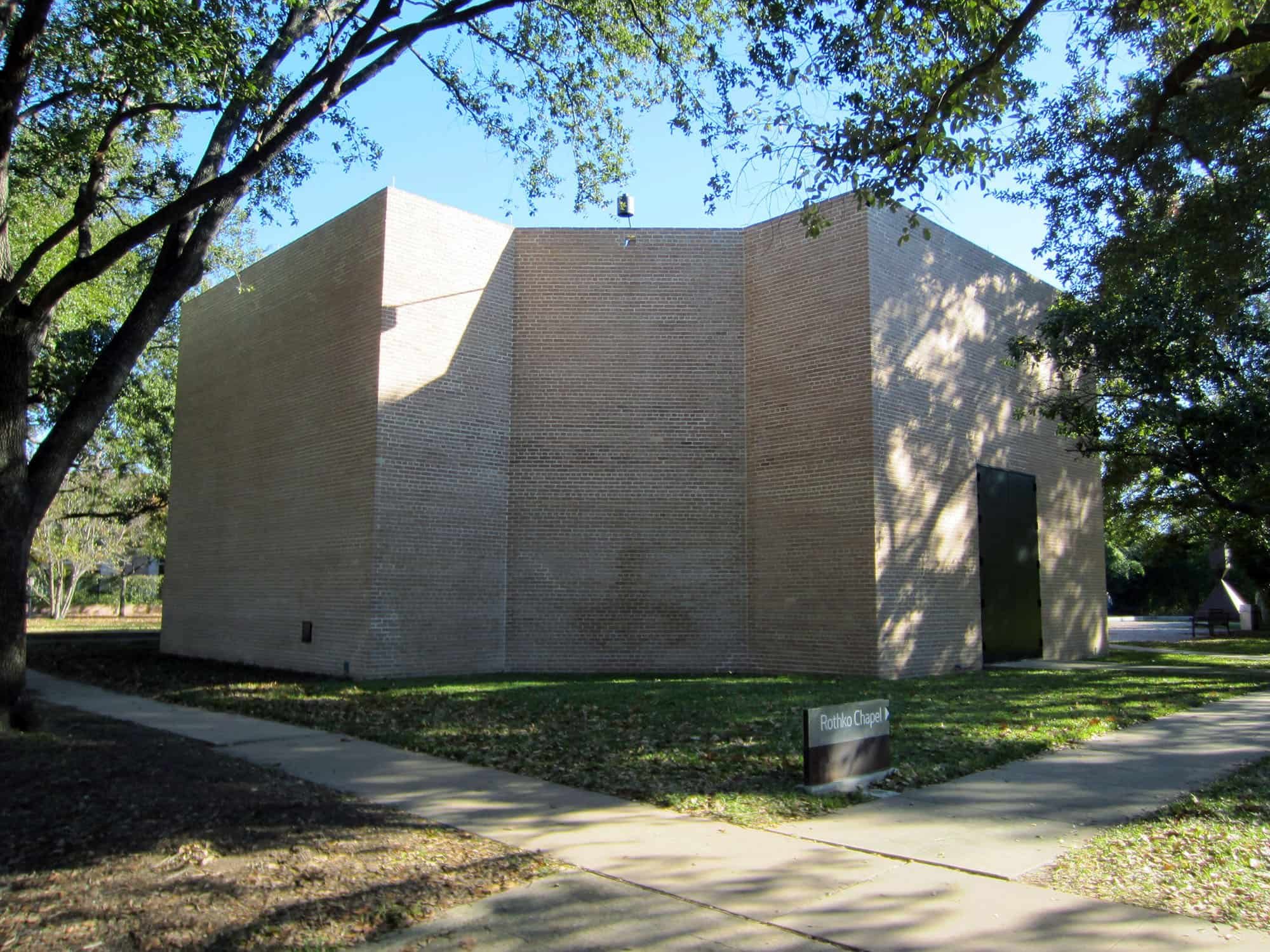
Rothko Chapel, Houston, 2012 by Wikimedia Commons User: WhisperToMe, used under CC BY-SA 3.0
Rothko Chapel
Houston, Texas
Described as ‘a sanctuary for the seeker’, Rothko Chapel houses 14 paintings created by legendary American artist Mark Rothko. The canvases feature deep, monochromatic hues of dark purple, maroon, and varying shades of black, which change in appearance with the shifting natural light entering through a central skylight.
The octagonal brick building serves as both a quiet space for spiritual meditation and a centre for human rights. Visitors must remain completely silent and refrain from taking photos.
-
Admission: Free to the general public; voluntary donations are welcome.
Location: 800 Taylor St, Houston, TX 77002 (in the Houston Museum District, near the Menil Collection).
Getting There: Accessible by foot from nearby street parking or regional bus lines within the Museum District.
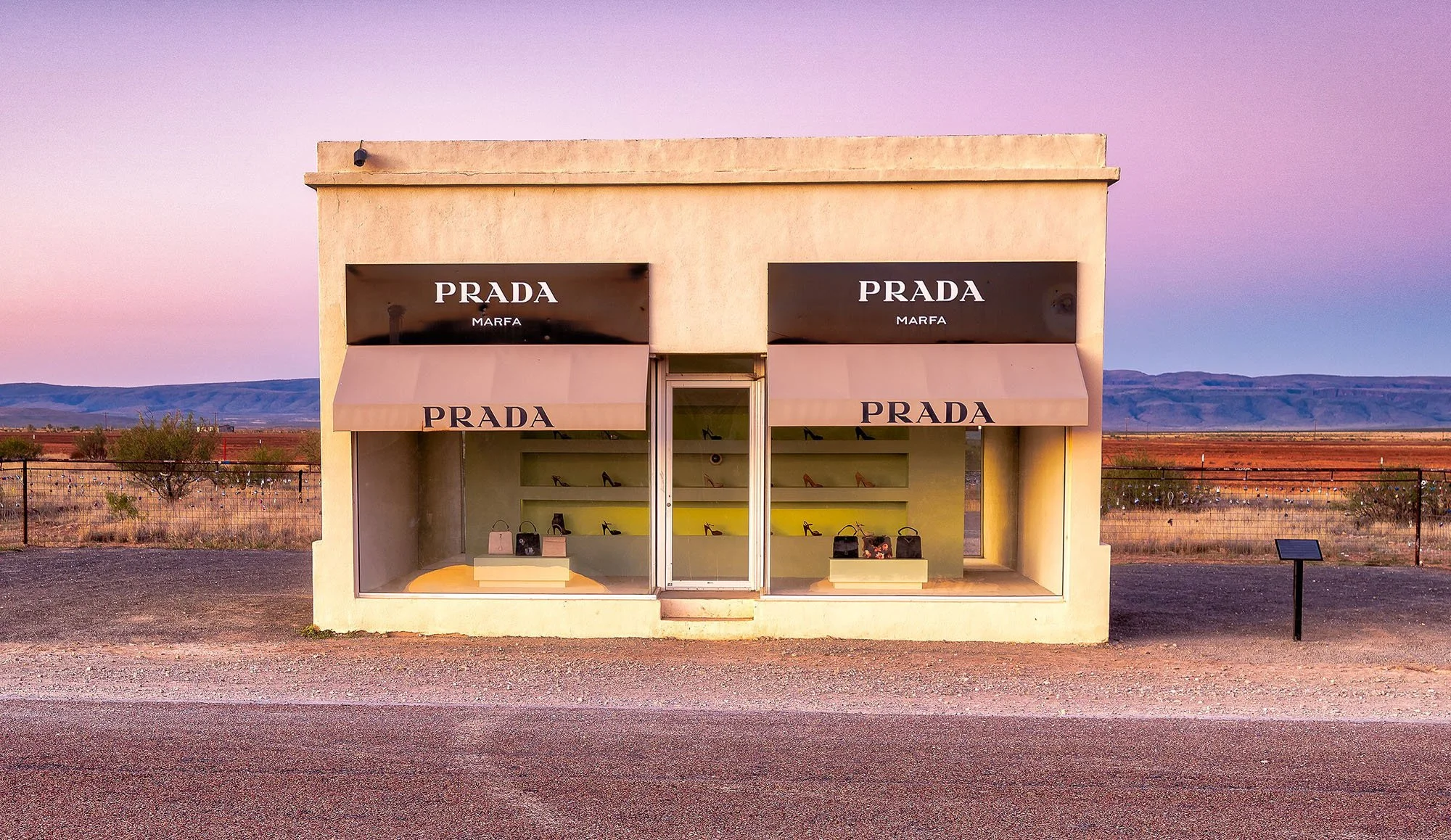
Prada Marfa by Elmgreen and Dragset — photo by Mobilus In Mobili, licensed under CC BY-SA 2.0 creativecommons.org
Prada Marfa & The Legacy of Donald Judd
Chihuahuan Desert, West Texas
Marfa is the capital of Minimalism in the USA: the place where pioneering artist Donald Judd installed his work across a decommissioned US Army base.
Decades later, that same minimalist legacy inspired Scandinavian artist duo Elmgreen and Dragset to create Prada Marfa. Located on an isolated stretch of Highway 90, this permanent installation mimics a luxury storefront, forever sealed and stocked with shoes and handbags from the 2005 collection.
For me, Prada Marfa is a surreal and photogenic critique of consumerism.
-
Admission: Free.
Location: US Hwy 90, Valentine, TX 79854 (1.4 miles northwest of Valentine, not in Marfa).
Getting There: On the south side of US Hwy 90, less than two miles west of Valentine. Remote desert location with no services nearby; drive carefully and be cautious of highway traffic when stopping.
Ballroom Marfa for installation details
chinati.org for Judd's permanent collections
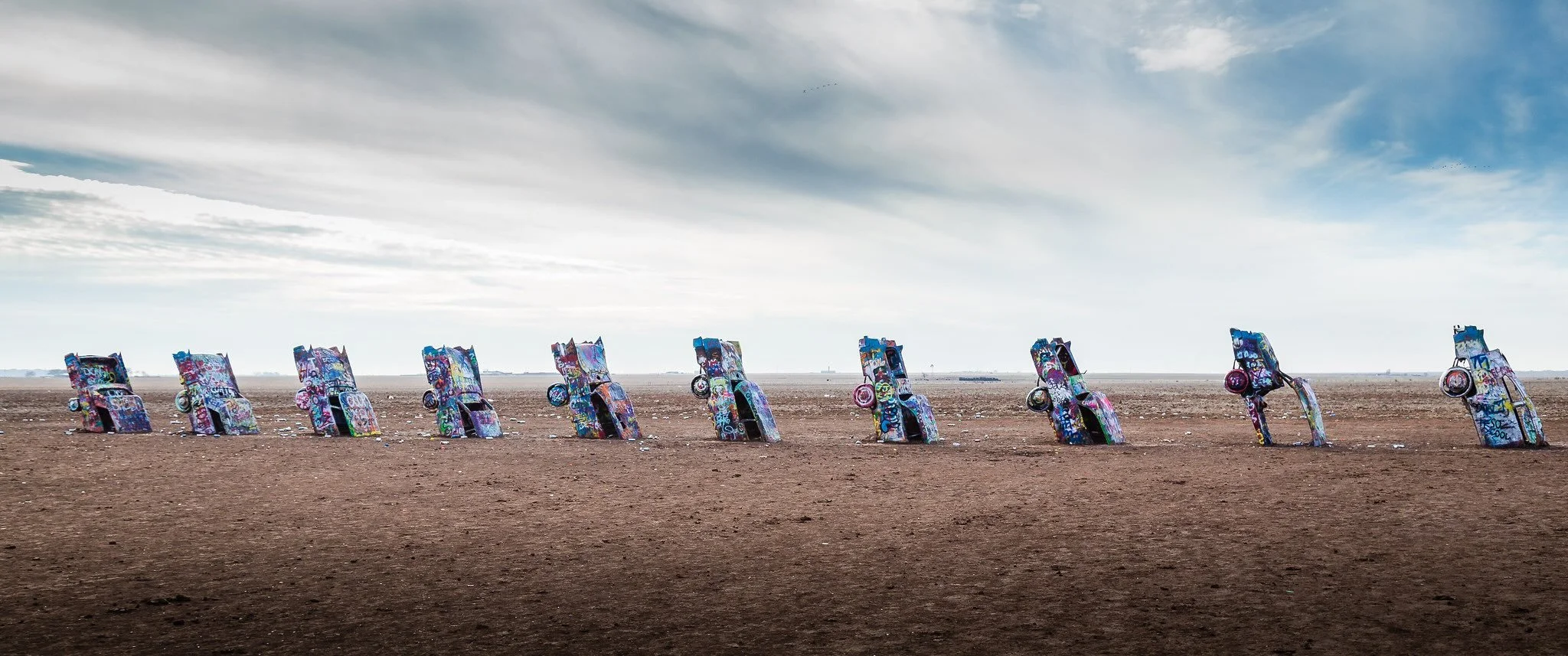
Cadillach Ranch — photo by Mobilus In Mobili, is licensed under CC BY-SA 2.0 creativecommons.org
Cadillac Ranch
Texas
A 1970s art installation, created by the art and architecture collective Ant Farm, that has become an iconic American roadside attraction on Route 66.
The artwork, facilitated by the eccentric millionaire Stanley Marsh 3, is a permanent installation of 10 Cadillac sedans buried nose first at a 60-degree angle into the dirt of a flat field within eyeshot of Interstate 40.
Though graffiti wasn’t part of the original plan, Cadillac Ranch has become an interactive American pop culture experience; visitors can spray-paint their mark on the cars.
-
Admission: Free
Location: 13651 I-40 Frontage Rd, Amarillo, TX 79124. On south side of Interstate 40 (Historic Route 66), just west of Amarillo's city limits.
THE ELUSIVE SITES
Remote artworks made mysterious due to limited access and prohibited photography. These are the sites I yearn to visit and are worth investigating for those with persistence and time.
The Lightning Field by Walter De Maria
New Mexico
The Lightning Field (1977) by Walter De Maria is a seminal Land Art installation in remote western New Mexico, consisting of 400 stainless steel poles arranged in a precise grid over one mile by one kilometre. Designed to be experienced slowly and in changing light—especially at sunrise and sunset—it requires an overnight stay, arranged through the Dia Art Foundation (May–October).
Access is tightly controlled, and photography is strictly prohibited to preserve the immediacy of the experience and the work’s relationship with its environment.
diaart.org for access details
Star Axis by Charles Ross
New Mexico
Star Axis is a monumental Land Artwork by Charles Ross, conceived as a naked-eye observatory aligned to the sky and built in the desert near Floyd. It is currently closed to the general public while construction continues, but special visits are available to Supporting Friends by prior arrangement through the Land Light Foundation.
City by Michael Heizer
Nevada
City is Michael Heizer’s vast desert sculpture in Garden Valley, one of the most significant Land Art works in the United States. City is open only during a limited visitation season on a reservation basis through the Triple Aught Foundation, with photography not permitted on site.
Roden Crater by James Turrell
Arizona
Roden Crater is James Turrell’s long-running monumental work inside a volcanic cinder cone in northern Arizona, designed as a light-and-sky observatory. It is presently closed to the public while construction continues, though the project states that it is being developed toward eventual public opening.
The Amarillo Ramp by Robert Smithson
Texas
Amarillo Ramp (1973) is Smithson’s final piece of Land Art and also the site of his death, when the plane in which he was surveying the work in progress crashed. The sculpture was posthumously completed by Nancy Holt and artists Tony Shafrazi and Richard Serra.
Amarillo Ramp consists of a 140-foot diameter partial circle of rock which rises out of the ground to a height of around 15 feet. The artificial lake in which the piece once emerged is now dry, and the sculpture is slowly eroding.
The artwork is an illustration of Smithson’s fascination with entropy. The artwork is located on private land. Permission must be sought through the Holt Smithson Foundation.