Three Glasses
There is no hurry to Tuareg tea, nor any need for explanation.
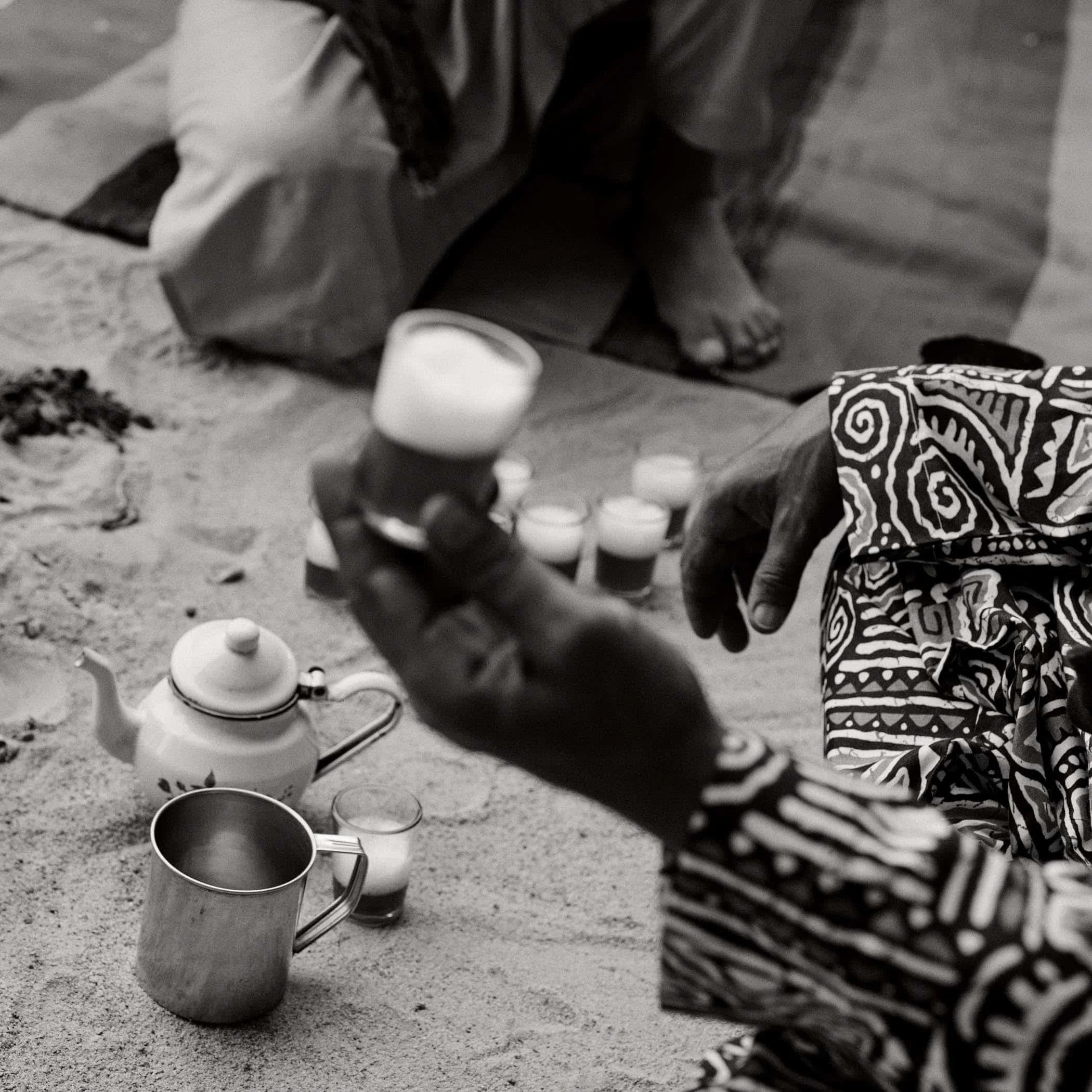
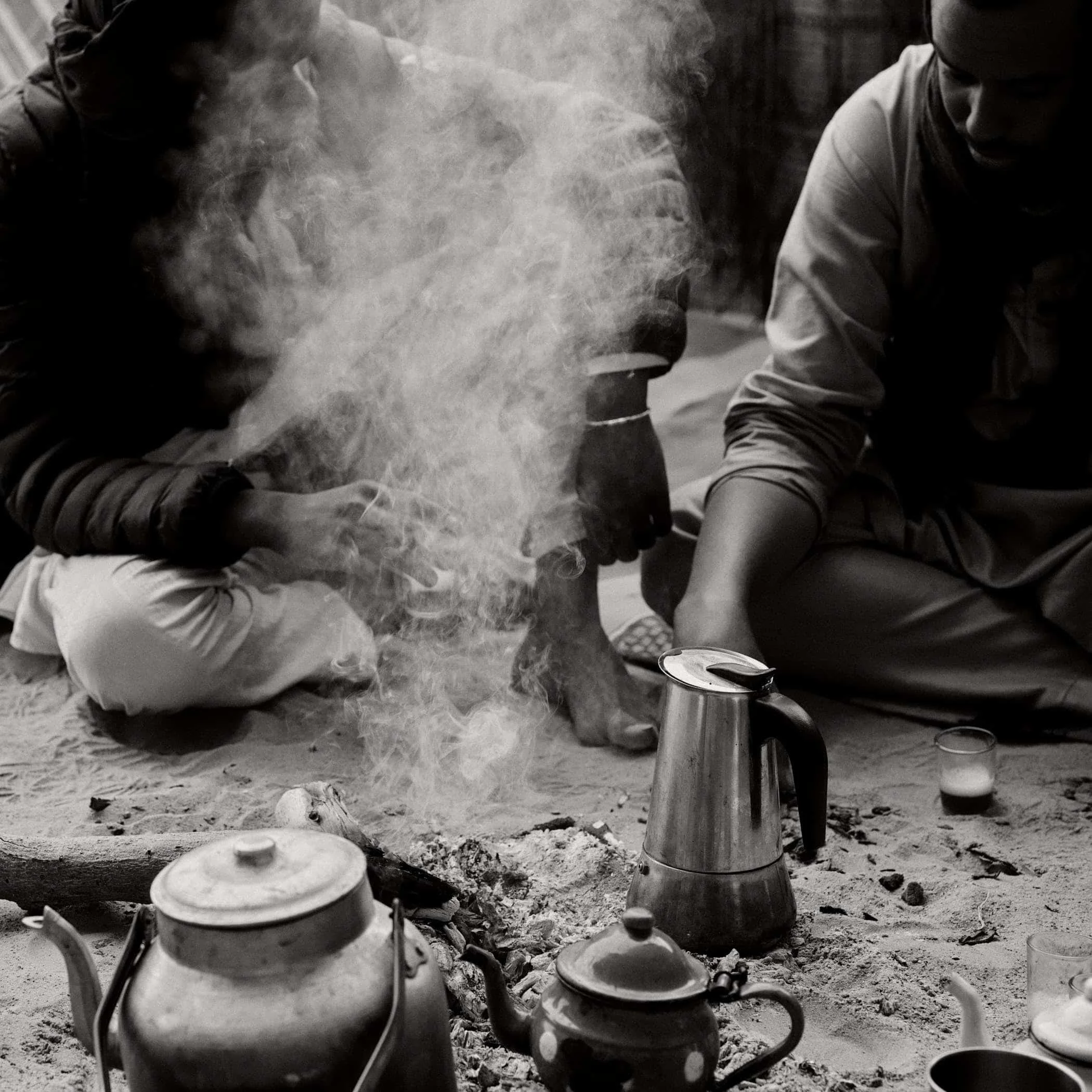
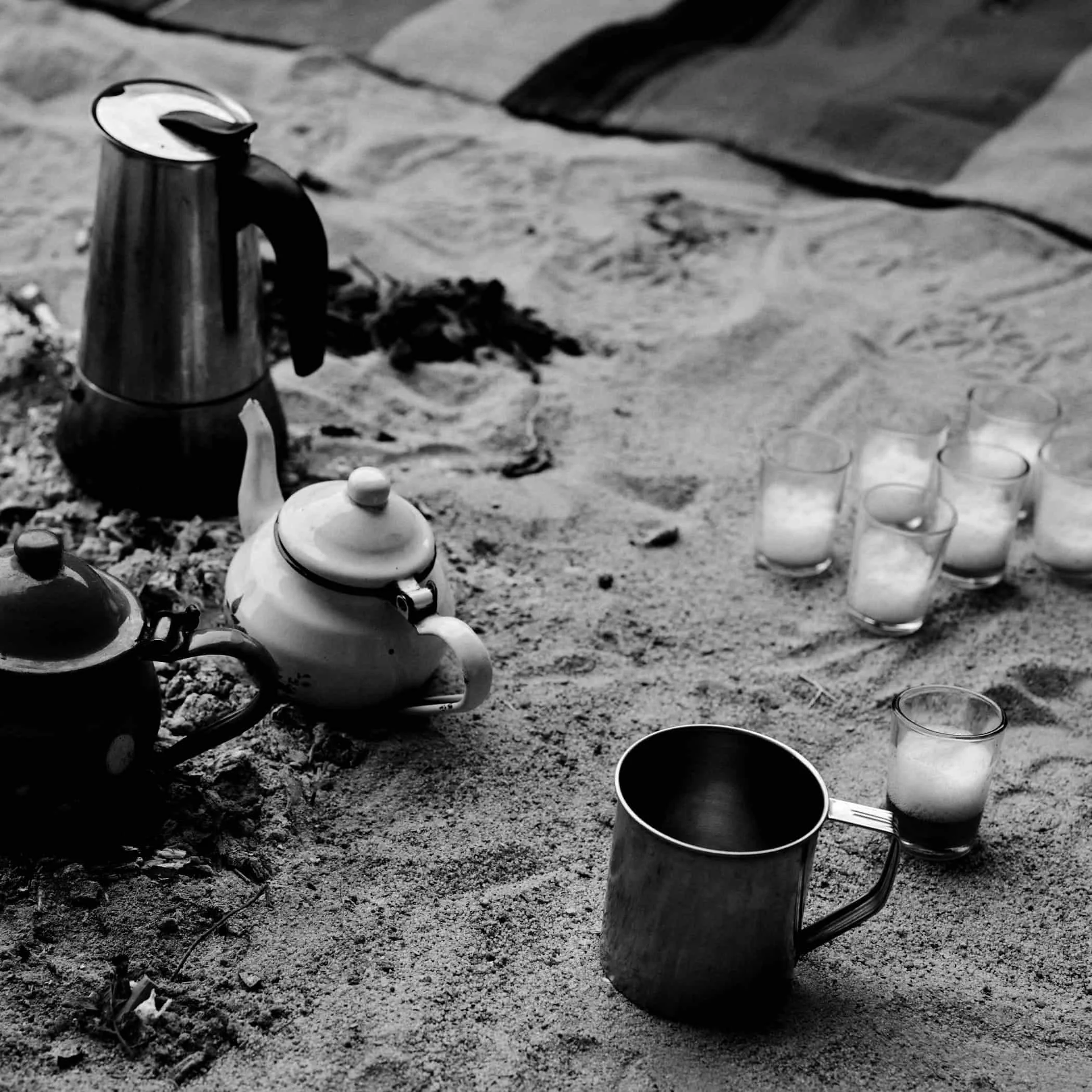
Tea in the Sahara is prepared slowly. In the Sahara one does not prepare it in any other way. A small metal teapot goes on the coals; the blue or red paint is thin in spots from years of heat and use. With the very glasses that will be used for drinking, a measure of Chinese gunpowder green tea is put in the pot. Water is added and then poured off before the pot is put back to the fire. What comes of those leaves are three rounds of tea.
The first glass is as unsoftened and sharp as life itself, and is taken without comment. Bitter, it sets a serious tone for the ritual.
Sugar makes the second glass sweet, like love. The bitterness is still there but has given way. One pours from some height, a thin and deliberate stream to make the pale foam rise in the glass. That foam is important, a sign of care.
Then there is the third glass. The leaves have been mostly spent, so the tea is faint in colour and light, all sweetness.
The children come forward now for what was not offered them at the start. The adults do not drink with haste; there is no point in rushing the conclusion.
It would be impolite to refuse. To go before the third glass is to leave matters unfinished. Conversation may ebb and flow around the proceedings or stop altogether. Silence and waiting are part of it.
Time, heat and sugar are the only things put into the same leaves to alter their concentration and yield three different outcomes.
One pot, three glasses. In the Sahara, that is enough.
With thanks to Piora Klinger and Tito Khellaoui.