A Journey through Drokpa Nomad Country
Photographs & Notebooks
During my trip to Nangchen County in Kham, Tibet, I made a journey through Drokpa nomad country, staying with several families along the way.
The Drokpa (Tibetan: འབྲོག་པ་) hail from ancient nomadic pastoralists whose name translates to "people of the solitudes".
Traditionally, the Drokpa herded yaks, sheep, and horses on the Tibetan plateau and formed communities to support each other.
The motorbike has largely replaced the horse and many families are now semi-nomadic: living in houses in the winter and camping on their ancestral pastures in the summer.
The text that accompanies the photographs is taken from my notebooks.
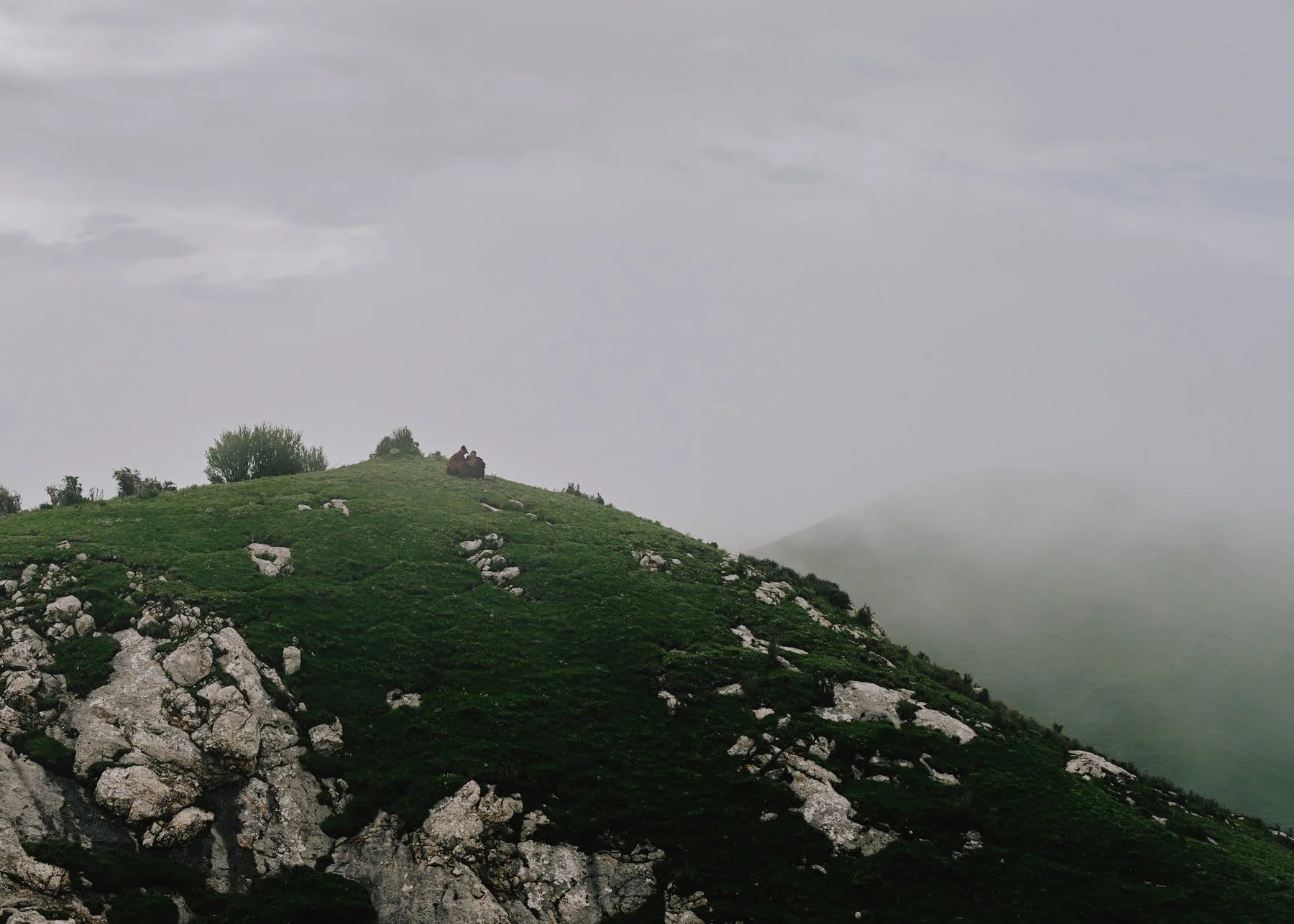
Tenzin plays with his son while his brother Dawa meditates on the hill behind.
The entrance to the family compound, complete with Yak horns.
Varka, 10th September 2018
The first thing I notice is a monk in red robes sitting motionless on the hill behind the family compound. Tashi tells me that this is Dawa, Tenzin’s brother, meditating. A large percentage of Tibetan families have at least one son who is a monk. This brings spiritual merit and good fortune to the family and helps with resource management: monasteries provide food and education.
My driver Kinga with the twins, part of the extended family that live under one roof.
Tenzin’s father makes Tsampa - roasted barley mixed with tea and yak’s milk.
Varka, 11th September 2018
When we enter into the house there is a poster of the Dalai Lama tacked to the wall. When I walk back through to the living room after taking tea in the kitchen, the poster has been replaced by a child’s drawing. While religion is encouraged in Tibet, images of the Dali Lama are banned by the Chinese authorities. Clearly my presence here makes them wary.
In the kitchen we eat Tsampa and watch a Chinese war film. Tashi tells me that the plot with these films is aways the same: heroic Chinese soldiers repel the evil Japanese invaders.
Tenzin takes his young family for a ride around the settlement.
The grandmother of the family leads the Yaks to a pasture.
Villagers constructing a house take a moment to pose for my camera.
I go for a walk around the settlement and unwittingly wake up a napping Yak herder.
Varka, 12th September 2018
Tashi tells me that the family sell 2-3 Yaks from their herd every year to fund the needs of the extended family. The house is a large concrete bungalow with a walled compound, set among green hills where Yaks and horses roam freely. There is no central heating and a large vat of water stands in the kitchen for cooking and drinking. Clothes are washed out by the tap shared with the other houses in the settlement. The toilet doesn’t exist as a building but is “outside in the garden”. Their lifestyle seems leisurely.
In the afternoon we drive to the nearby hot springs. While I lounge with monks in a geothermal pool, a group of smartly dressed Chinese police officers approach Tashi my guide. We march down to the police tent that is pitched nearby. I sip tea and biscuits on a sofa while they reprimand Tashi for not accommodating me in a tourist hotel.
Westerners are a rare sight in Nangchen County.
I eat my bowl of watery noodles under the benevolent gaze of these ladies.
Dompa, 14th September 2018
On the way to another nomadic family, we drive over a high pass in heavy rain. With provisions running low we stop at an un-named monastery for food. A young monk opens the door and seems both shocked and delighted to see a westerner here. We find ourselves among local Drokpa nomadic people (from the Kagyu or Nyingma sects) who come here for food and medical treatment, which is given freely too all. There is a petrol station here but nobody around to serve us.
We call at a random house to charge our phones, chatting with the owner over a bowls of tea as our phones charge. At one nomadic camp we are refused entry as a person has been taken ill, we hear the chants of healers coming from a nearby tent.
A nomad camp at the end of a green valley.
A mother and her children look on as we eat lunch at their camp.
Pema checks himself in the mirror of his motorcycle.
My Guide Tashi poses as a monk as Pema photographs him.
Dompa, 15th September 2018
We arrive late and camp by several nomad families in a green valley. After a breakfast of dried yak meat (Sha Kampo), Tashi and Kinga borrow a neighbours motorcycle, I hop on the back of Pema’s bike and we ride into the Jurassic hills. Tashi tells me he was a monk for a few years but gave it up to be a tour guide. He wraps himself in a red blanket and assumes a monk-like pose while Pema takes his photo.
We ride to a hill where people are searching for Caterpillar Fungus, (Yartsa Gunbu) which infects ghost moth larvae, consumes them, and sprouts from their heads. This highly prized traditional medicine generates a good income for rural Tibetan communities.
A group searching for Caterpillar Fungus. Yushu Prefecture is one of the premier harvesting zones for this highly prized traditional medicine.
Street sellers of Caterpillar Fungus in Nangchen Town. Prices ranges from $10 to $20 USD per individual piece. In luxury shops in Beijing or Shanghai, the price routinely triples, matching or exceeding the price of gold.
Nangchen Town, 16th September 2018
Driving back, I’m struck by how many solitary meditators we’ve seen on our journey. People do what they can to get by out here, but the real currency seems to be the accumulation of spiritual merit and positive karma over physical goods.
“It is one of the great differences between your civilisation and ours, that you admire the the man who achieves worldly success, while we admire the man who renounces the world” - Rinchen Lhamo
PRACTICALITIES
I travelled with a private Tibetan guide and driver.
Snow Lion Tours run private or group tours to Nangchen in Kham
LOCATION: NANGCHEN COUNTY // 32°14’N 96°24'E