A HOUSE UNCHANGED
A Saunter through Haddon Hall, with a Guidebook from 1868.
Led by: On Foot Through the Peak James Croston
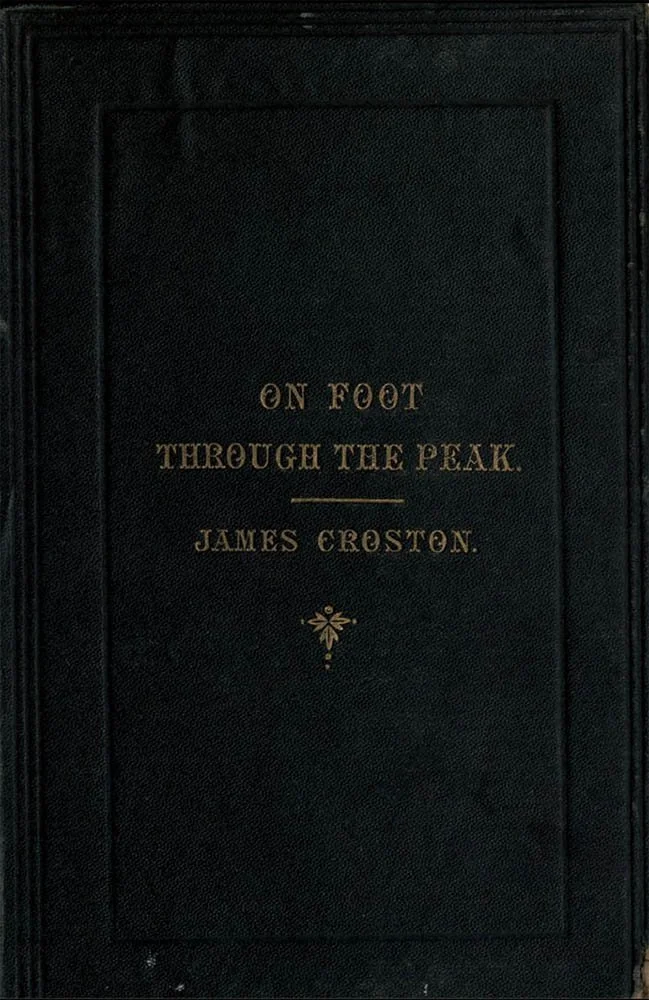
I picked up an old Victorian guidebook to the Peak District in my local secondhand bookshop. On Foot Through the Peak; or, A Summer Saunter Among the Hills and Dales of Derbyshire is full of the excessive verbiage of its age—but thats its charm. It makes a welcome change from ‘Top 10 Things to Do in the Peak District’.
So, disintegrating guidebook in hand, I set off for one of England’s best-preserved medieval manor houses.
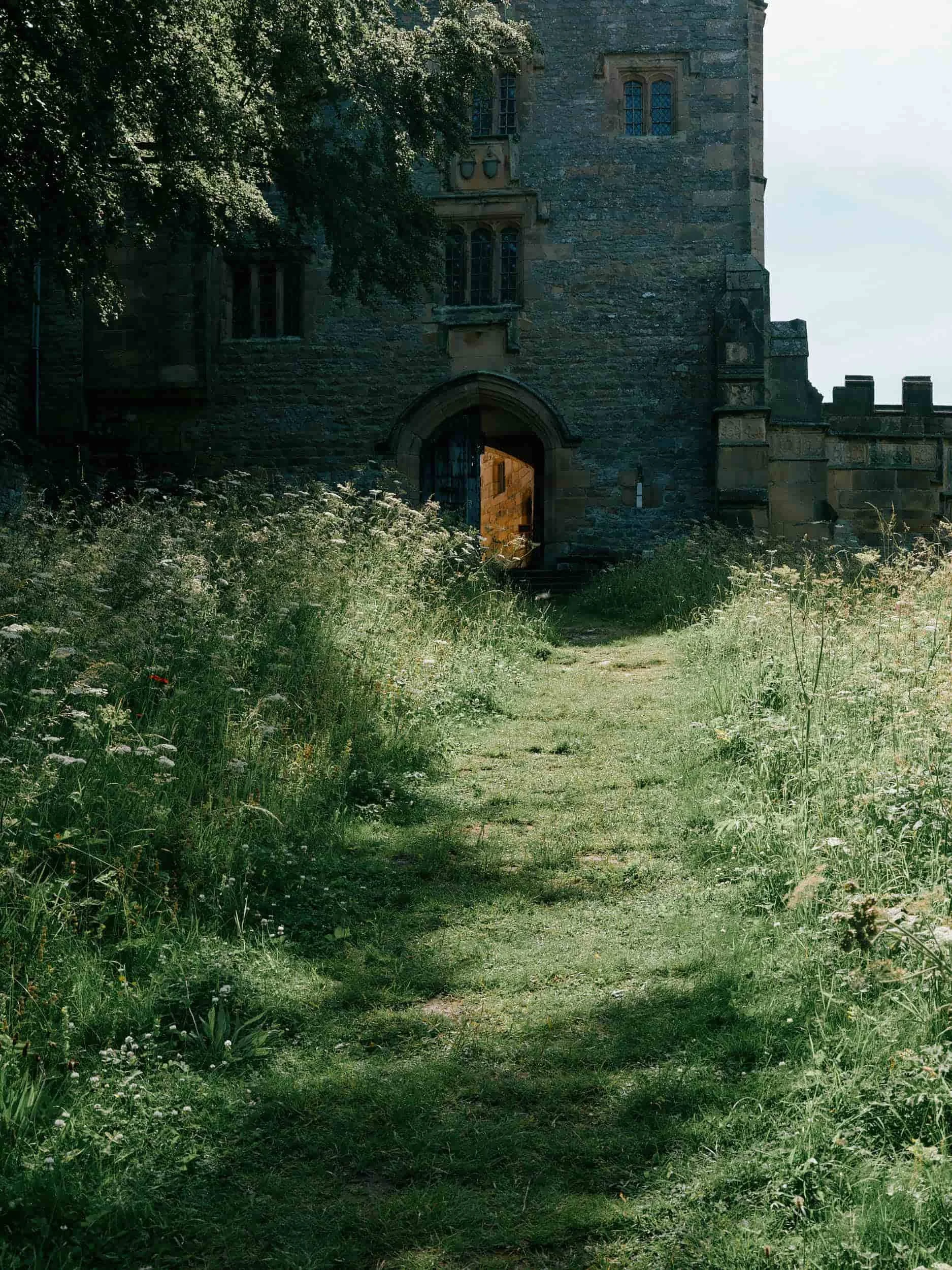
Haddon Hall is more than nine hundred years old, and for over two hundred years was left unoccupied. James Croston, the author of On Foot Through the Peak, arrived at Haddon in 1862, roughly 160 years into the Hall’s long sleep. Walking up the wild path through the long grass towards the entrance, I felt I was following him through a time portal
What is the first thing Croston tells us about Haddon? Not its empty grandeur, not its riverside gardens, not even its Great Hall.
He gives us gossip.
Dorothy Vernon, daughter of Sir George Vernon—the self-styled “King of the Peak”—allegedly eloped from Haddon during a masked ball. Croston recounts how her lover, John Manners, waited in the woods disguised as a forester while Dorothy slipped through a side door into the dark. It is pure historical romance, but it sets the mood before he even touches a doorknob.
Once inside, Croston goes all Wordsworth on me:
“We have gazed with wondering eye upon the gorgeous splendour of the ‘Palace of the Peak’; and wandered with fond delight through the silent courts and deserted halls of dear old Haddon, conjuring up bright visions of a far back age, when ‘Tapers shone, and music breathed, And beauty led the ball.”
Just as my sense of time and history is being recalibrated, he pivots to plasterwork. Goodness, the man loves a cornice. He catalogues plasterwork, coving and woodwork with the obsessive patience of someone convinced the human soul can be deciphered through wainscoting.
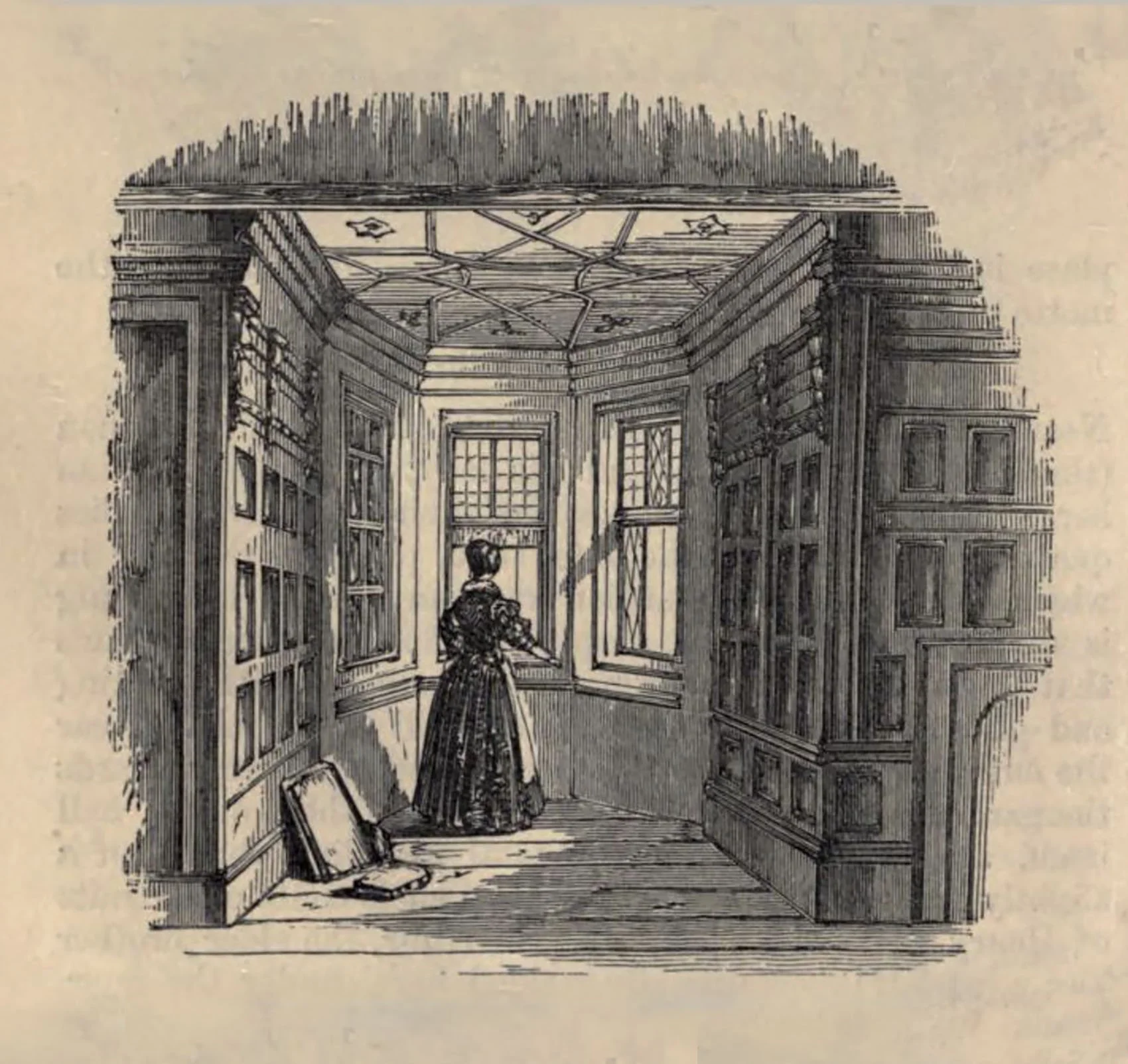
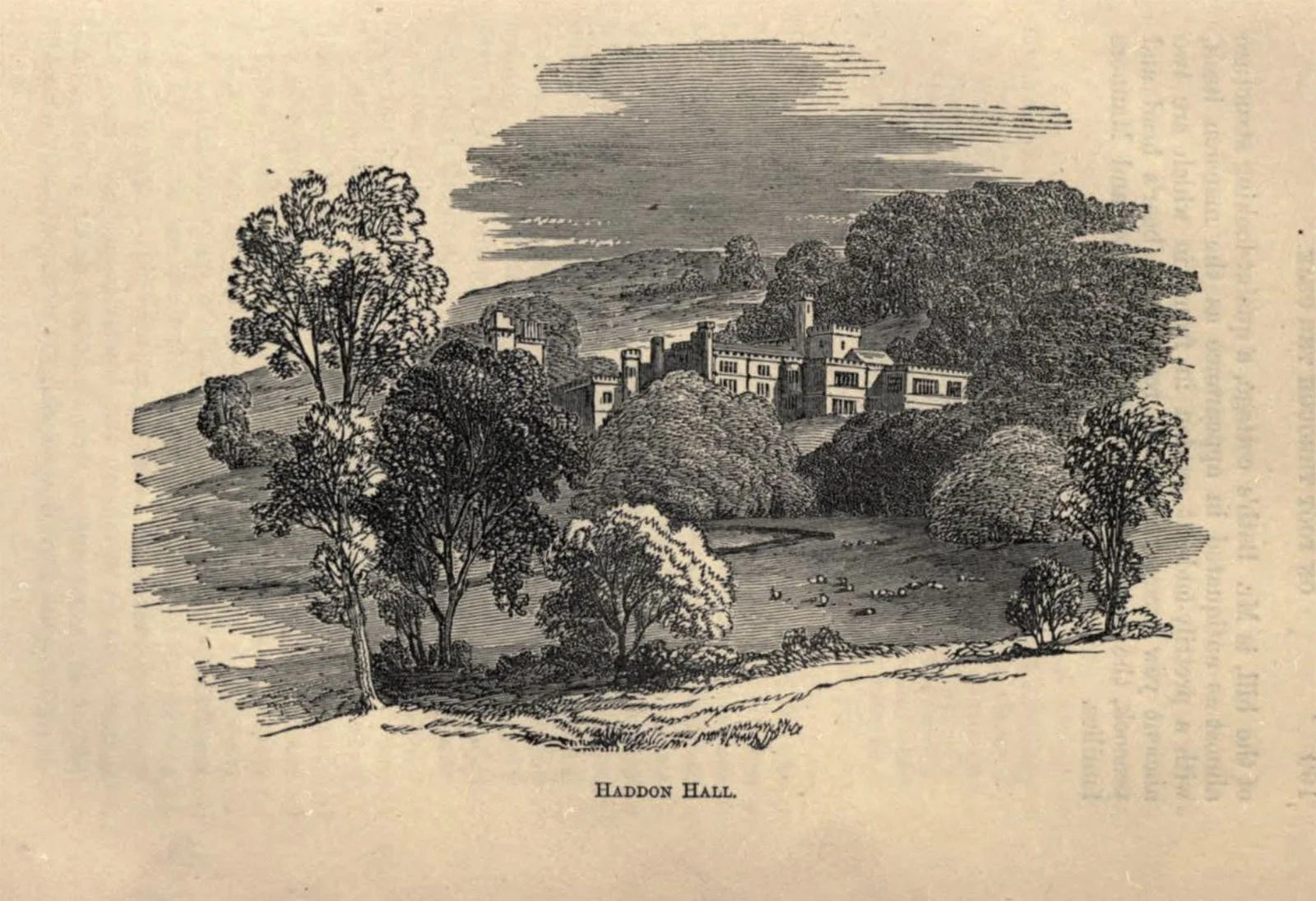
Illustration from On Foot Through the Peak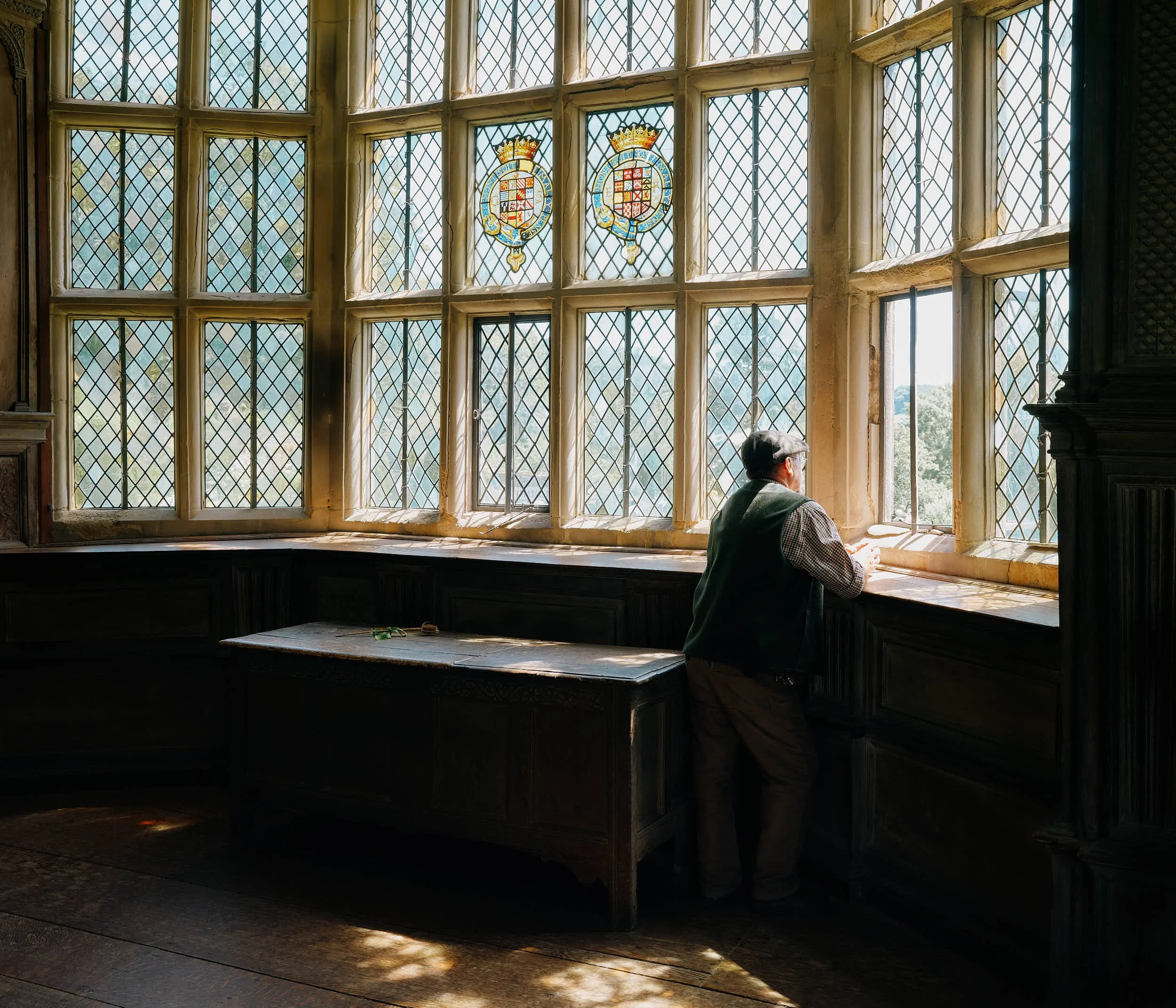
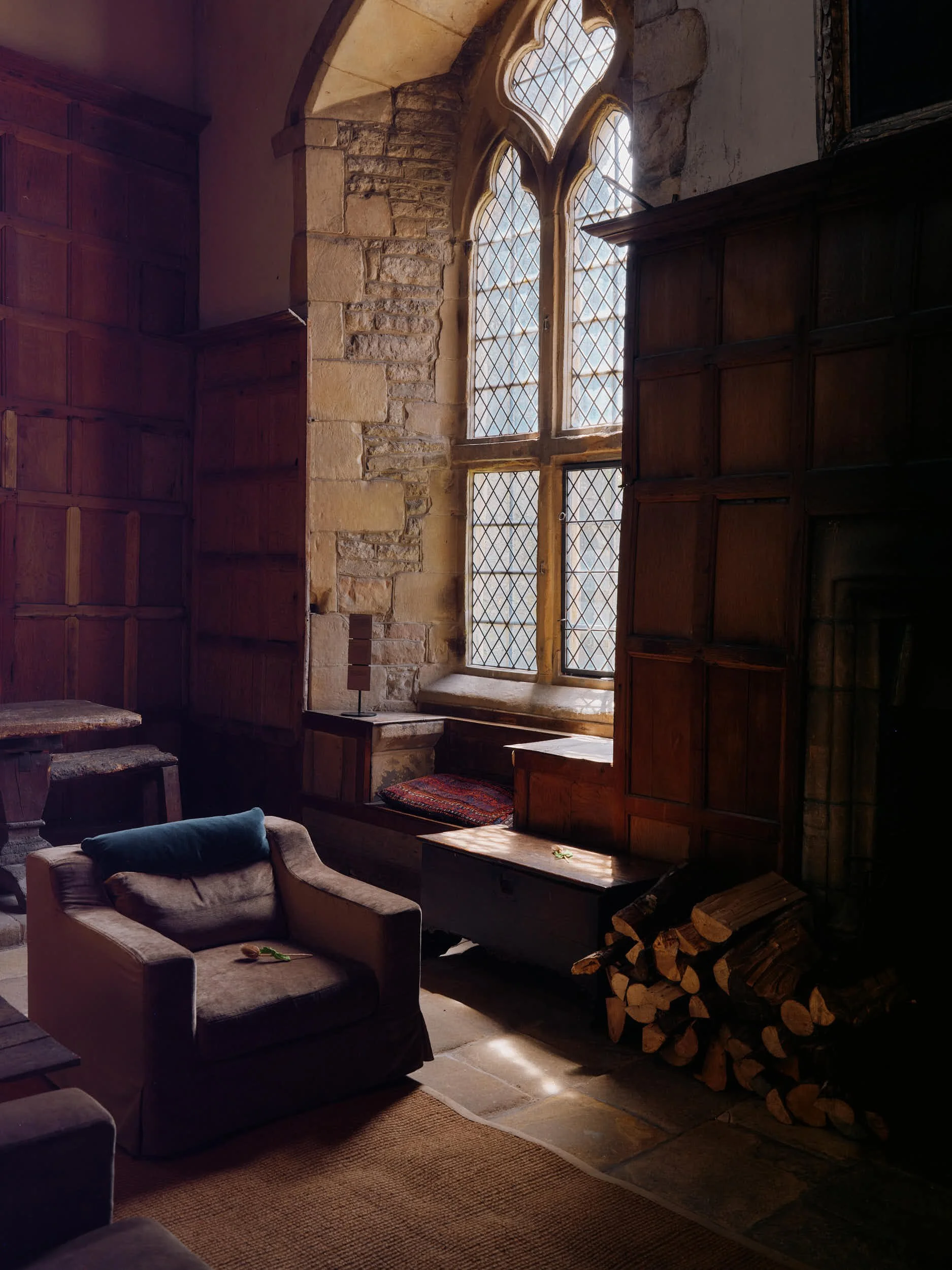
In the Great Hall, he inspects the high table and the minstrels’ gallery, picturing the “jovial mirth and roystering revelry” of old Vernon Christmases. Sir George kept open house for twelve straight days, during which “the boar’s head and the huge baron of beef graced the board, and the wassail-cup was circulated in the true style of old English hospitality.”
While I will pass on a severed swine’s head paraded to trumpets, a twelve-day wassailing bender does have an appeal.
Wandering these draughty spaces, you realise why Croston found Haddon so arresting—and why it still feels so today.
Croston contrasts Haddon favourably with nearby Chatsworth, stuffed with modern luxury and “refinement.” What he calls modernity, in other words, is the shocking idea that a house should be comfortable. By that measure, Haddon was hopelessly behind the times—which is precisely why it survived.
When the Manners family moved their principal residence to Belvoir Castle, they effectively shut the doors on Haddon, leaving it dozing by the River Wye for nearly two centuries. Its medieval and Tudor rooms escaped the Georgian and Victorian appetite for improvement. The result is a rare time portal: uneven floors, old panelling, moody tapestries, a chapel and the Long Gallery that feels as though it was abandoned only yesterday.
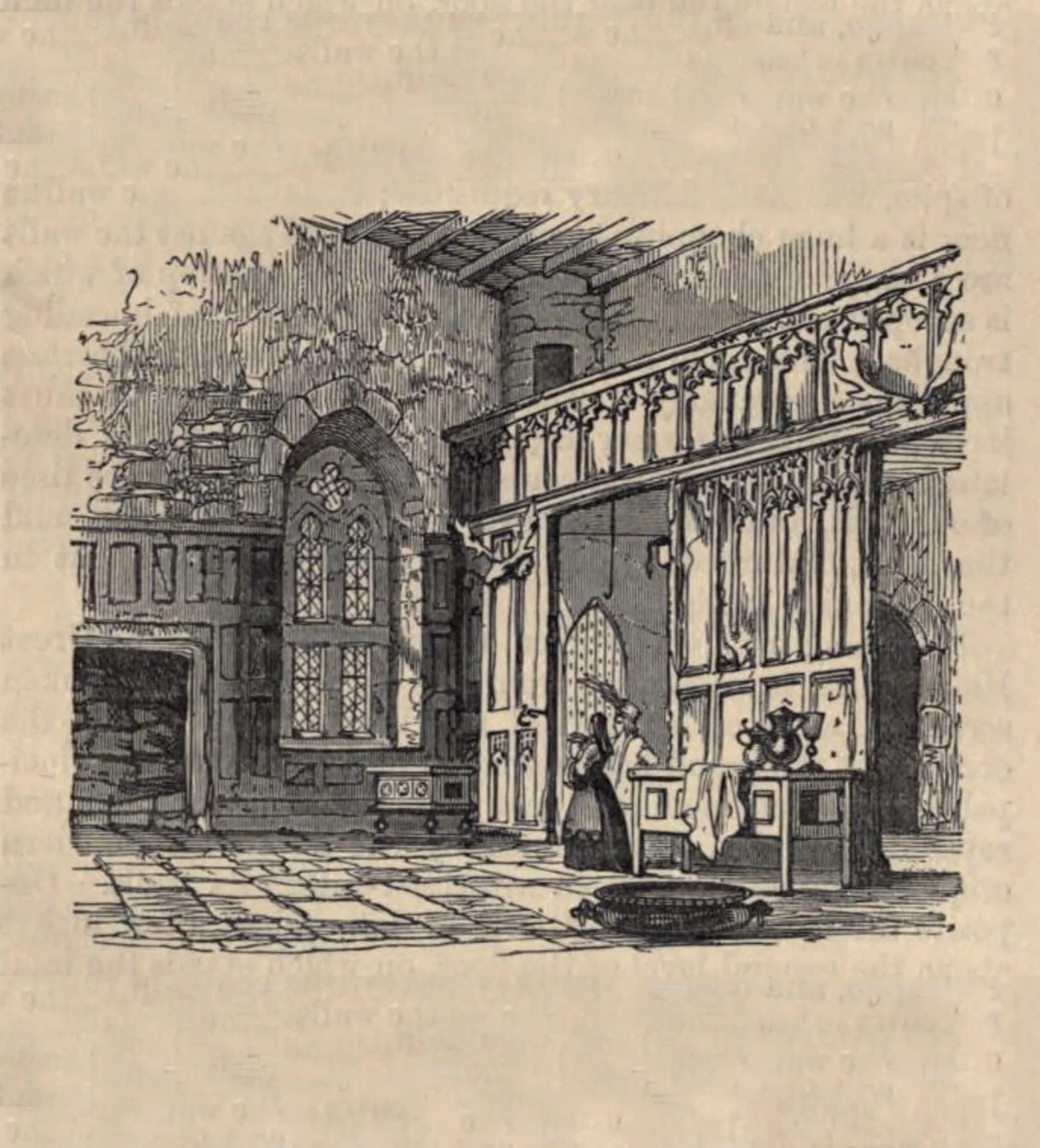
Illustration from On Foot Through the Peak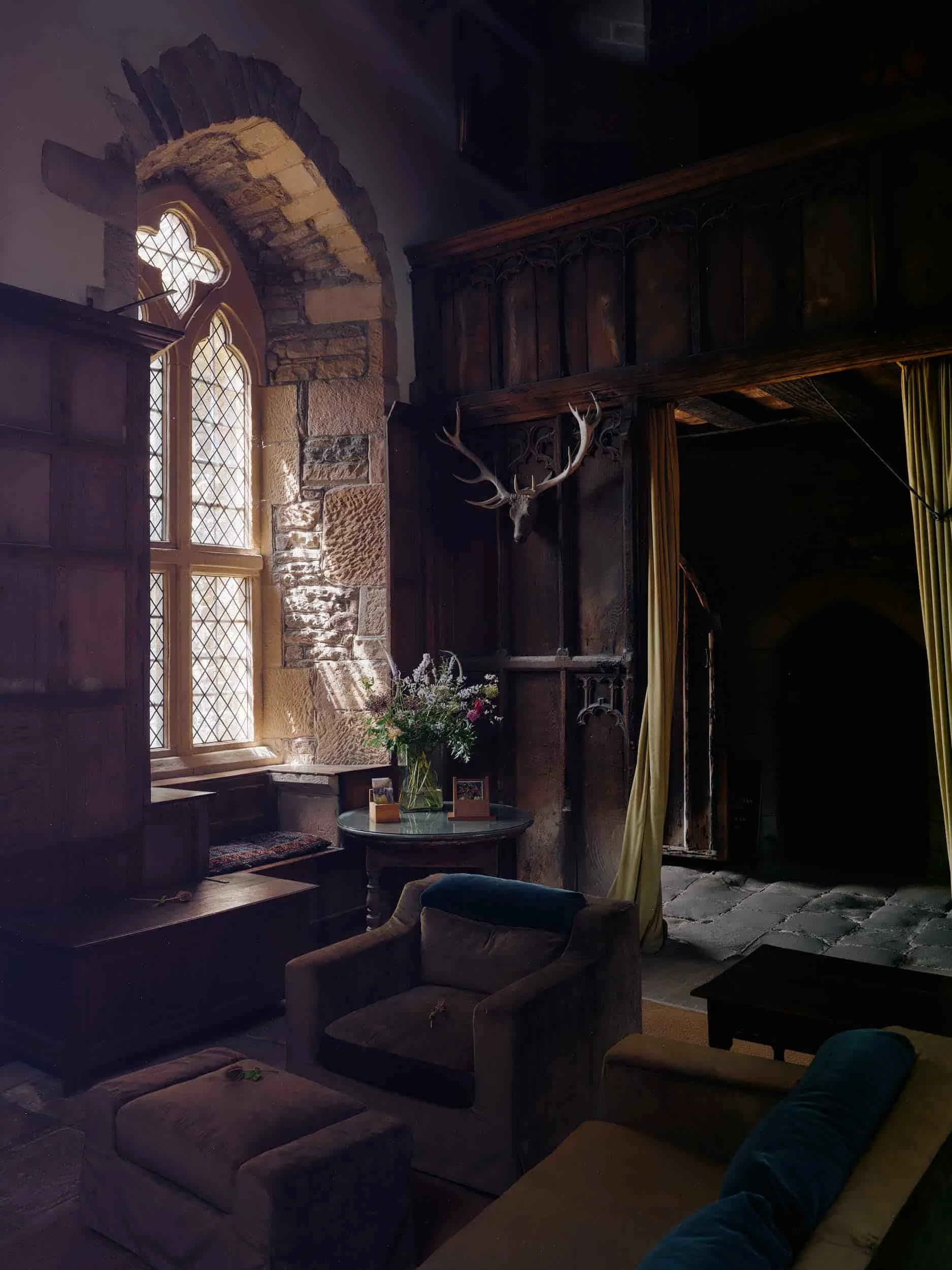
Today, the house has woken again. Lord and Lady Edward Manners live at Haddon. They have embraced its unreconstructed, romantic wildness: long grass, tumbling garden walls and ancient parkland, much of it restored towards its fourteenth-century form.
Having exhausted his architectural inventory, Croston surrenders to Victorian melancholy, dropping into verse:
“Haddon, within thy silent halls,
deserted courts and turrets high.
How mournfully on memory falls,
past scenes of antique pageantry.”
It is easy to chuckle at the melodrama, but I suspect the average visitor today is just as taken by Haddon’s wild medieval charm as Croston was in 1862. And that is quite an achievement for a house that has survived nine centuries.
I left the way Croston did: striking out on foot, over the little stone footbridge crossing the Wye. Croston would have approved of the saunter, but may not have forgiven the car park.