COFFEE WITH BORGES
A walking tour of the Cafés, Bookshops, and Tango in Old Buenos Aires

Led by:
Dreamtigers
Jorge Luis Borges
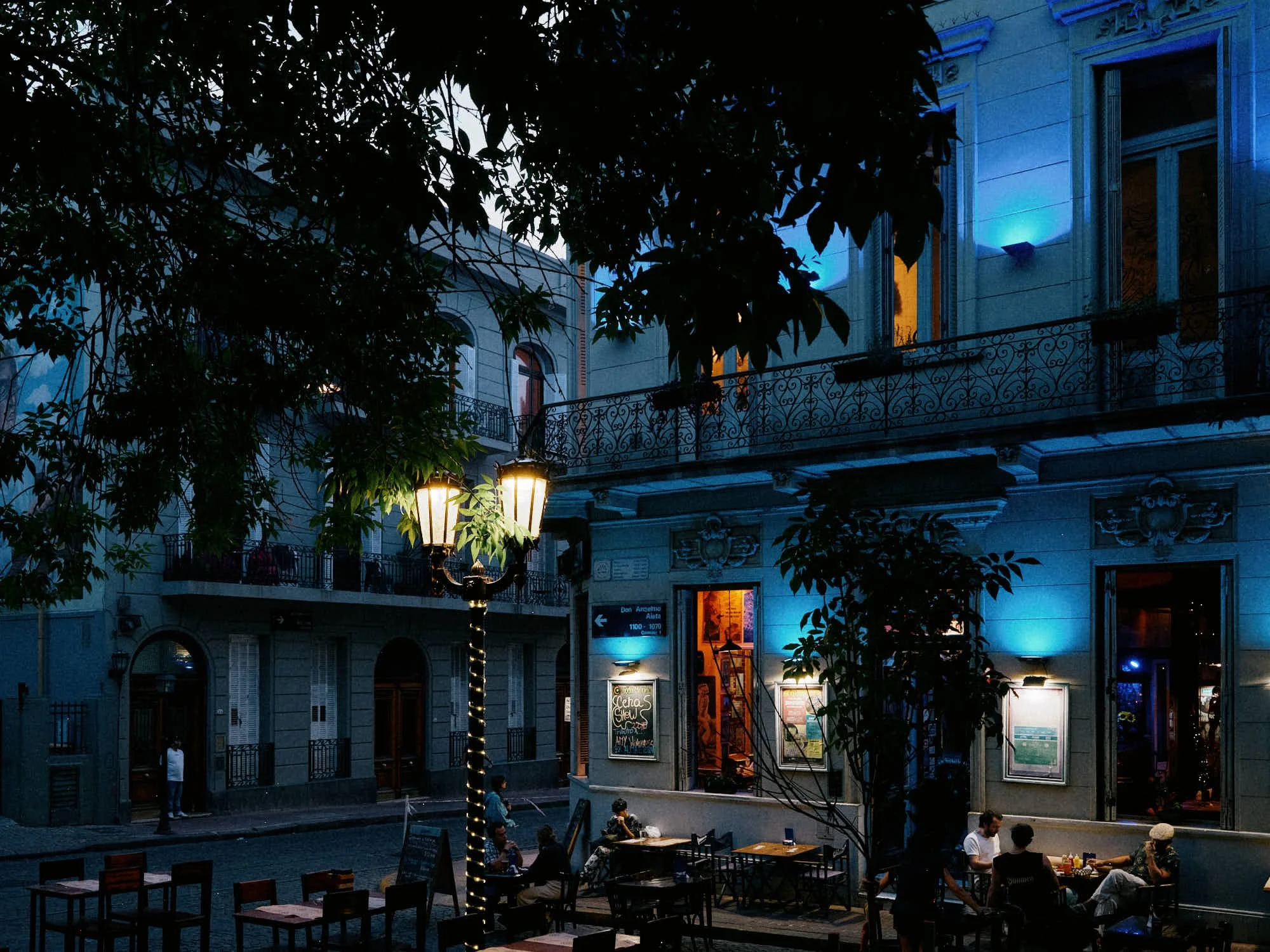
Whenever I arrive in a new city, I begin by looking for a good café, a bookshop and a bar. In Buenos Aires, I decided to follow Jorge Luis Borges. He was deeply attached to the city – its streets, bookshops and cafés – and in Dreamtigers he gives ordinary corners a mythic quality.
This book is a perfect companion to our walk: a collection of short pieces you can dip into over a coffee stops. Sixty years after its publication, I set out to find some of the places Borges loved, and ended up discovering a few of my own.
Bring comfortable shoes. Borges was a flâneur, spending much of his early life wandering the backstreets of Buenos Aires.LIKE MANY OF US, Borges laments the passing of what once was: “Our image of the city is always slightly out of date. Cafes have degenerated into bar-rooms; old arched entranceways with their grilled inner gates, once giving us a glimpse of patios and of overhanging grapevines, are now dingy corridors... that lead abruptly to an elevator.”
Perhaps thats why people queue to visit Cafe Tortoni, the oldest and most famous café in Buenos Aires.
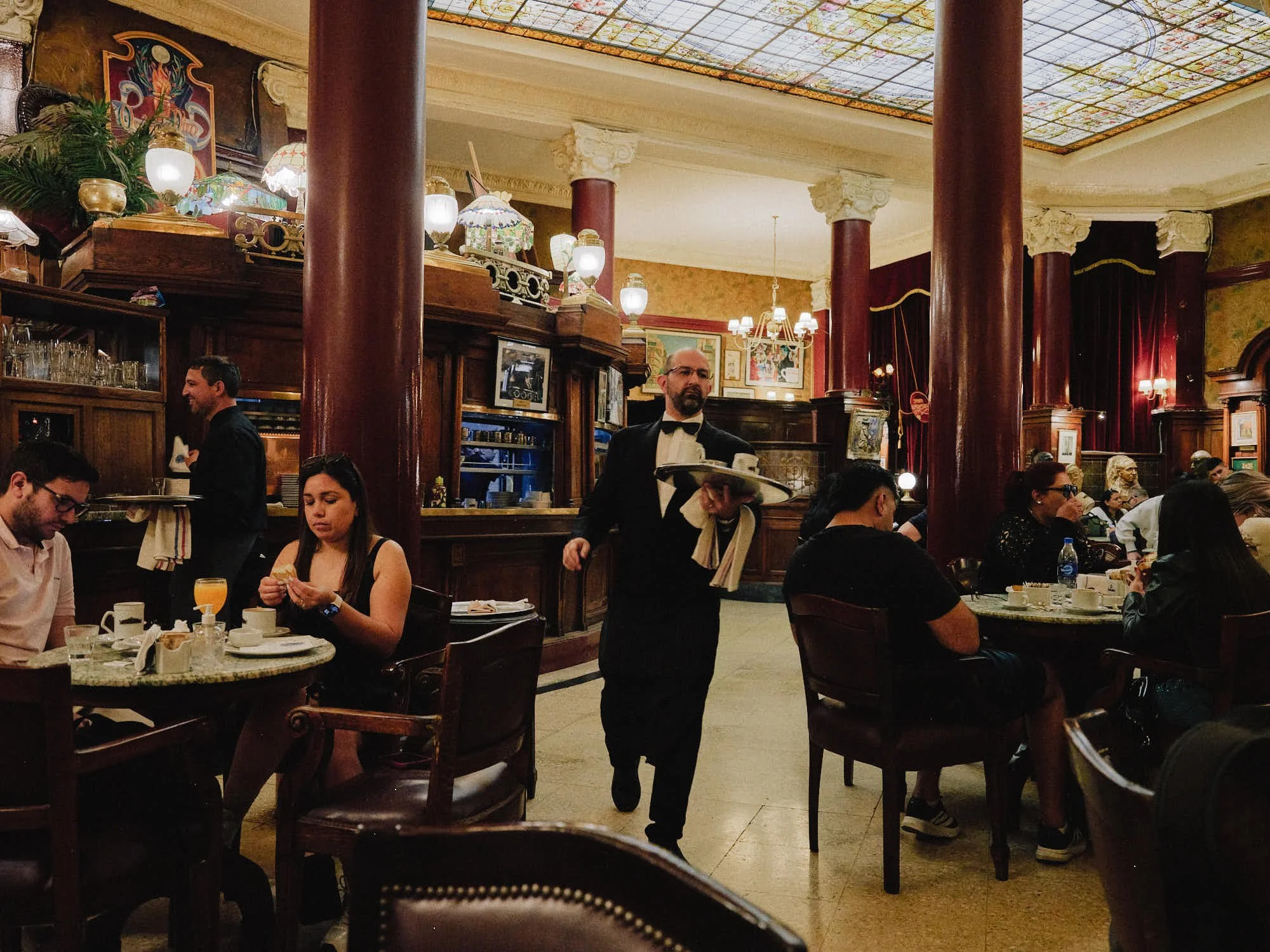
Breakfast at Café Tortoni
I order a cortado and medialunas (sweet, buttery croissants), open Dreamtigers and read ‘Borges and I’.
“I have a taste for hourglasses, maps, eighteenth-century typography, the roots of words, the smell of coffee, and Stevenson’s prose.”
Borges was a regular here, where he would write and debate literature with friends such as Adolfo Bioy Casares. Cafés also feature in his fiction. In The South, for instance, the protagonist enters a café on Calle Brazil to sip coffee and stroke a sleeping cat.
The opulent interior harks back to the golden age of cafés: oxblood-coloured marble columns, high stained-glass ceilings, mahogany panelling and original artwork. Despite the tourist crowds, Café Tortoni retains its old-school ambience. I imagine it must be special out of season. The back rooms, full of memorabilia, are also worth a poke around.
Café Tortoni - Avenida de Mayo 825
Borges also frequented La Biela, a Café in Recoleta, a where there is a sculpture of him and his friend Adolfo Bioy Casares.
La Biela - Av. Pres. Manuel Quintana 596/600 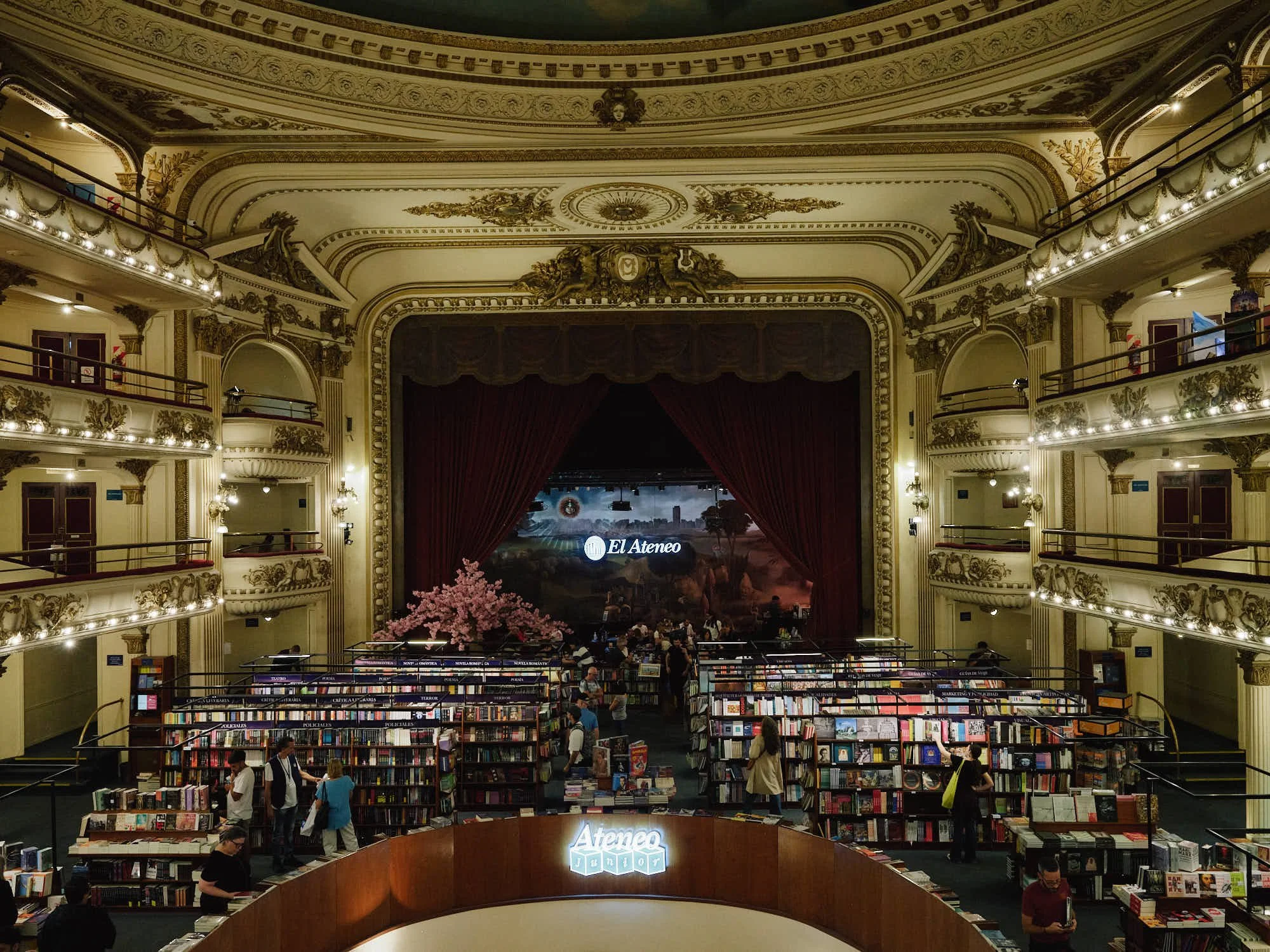
Lunch at El Ateneo Grand Splendid
In the cafe, I order a tostados and a cappuccino.
Borges had a lifelong fascination with libraries and books, which became a recurring theme in his writing. He explored ideas of infinity, time and the universe through the metaphor of the library. For 18 years, he was director of the National Library of Argentina in Buenos Aires, finding himself surrounded by books even as he gradually lost his eyesight.
In Prologue he writes
"Leaving behind the babble of the plaza, I enter the Library. I feel, almost physically, the gravitation of the books, the enveloping serenity of order, time magically dessicated and preserved."
El Ateneo Grand Splendid is a bookshop to behold: a 1919 theatre, stripped of its seats and packed from floor to ceiling with books. At first glance, its tiered, gilded balconies resemble a physical version of The Library of Babel from Ficciones– an infinite, symmetrical universe made entirely of books.
But then I notice that each balcony has its own reader, immersed in a private world. The labyrinth suddenly becomes something more intimate, bringing me back to what the private man in Dreamtigers cherished: “the eighteenth-century typography”, ink and paper.
The theatre was converted into a bookshop in 2000, but to me it's one of the most Borgesian places in Buenos Aires.
El Ateneo Grand Splendid - Av. Santa Fe 1860, C1123 Cdad
Borges was also a familiar face at Buenos Aires bookshops, including Librería La Ciudad in Galería del Este. He became friends with its bookseller, Luis Alfonso, who would sometimes give him books rather than sell them. Borges was an enthusiastic book hunter, particularly fond of Old Norse and Anglo-Saxon literature, Icelandic sagas and encyclopaedias.
Librería La Ciudad – Galería del Este, Florida 971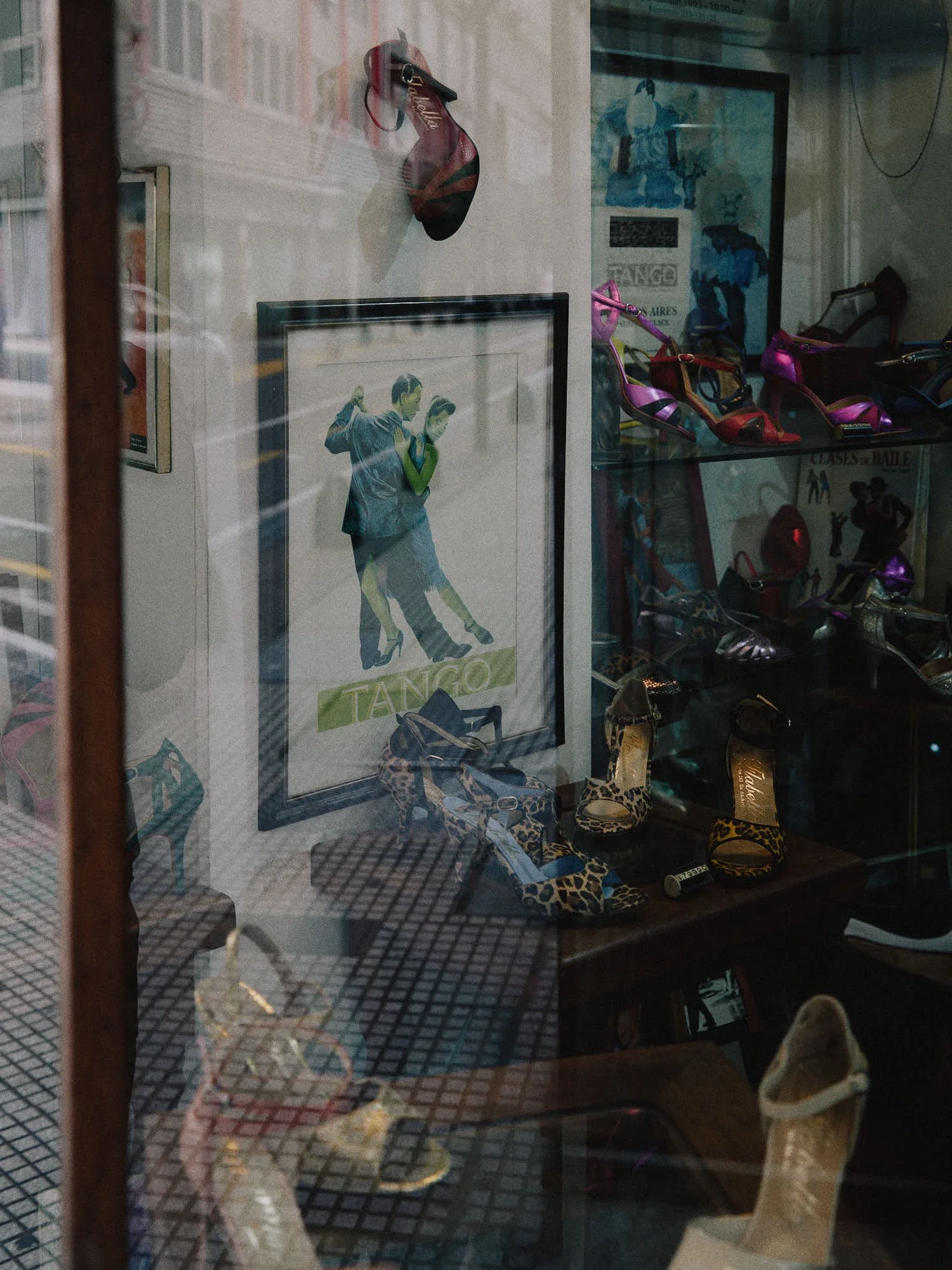
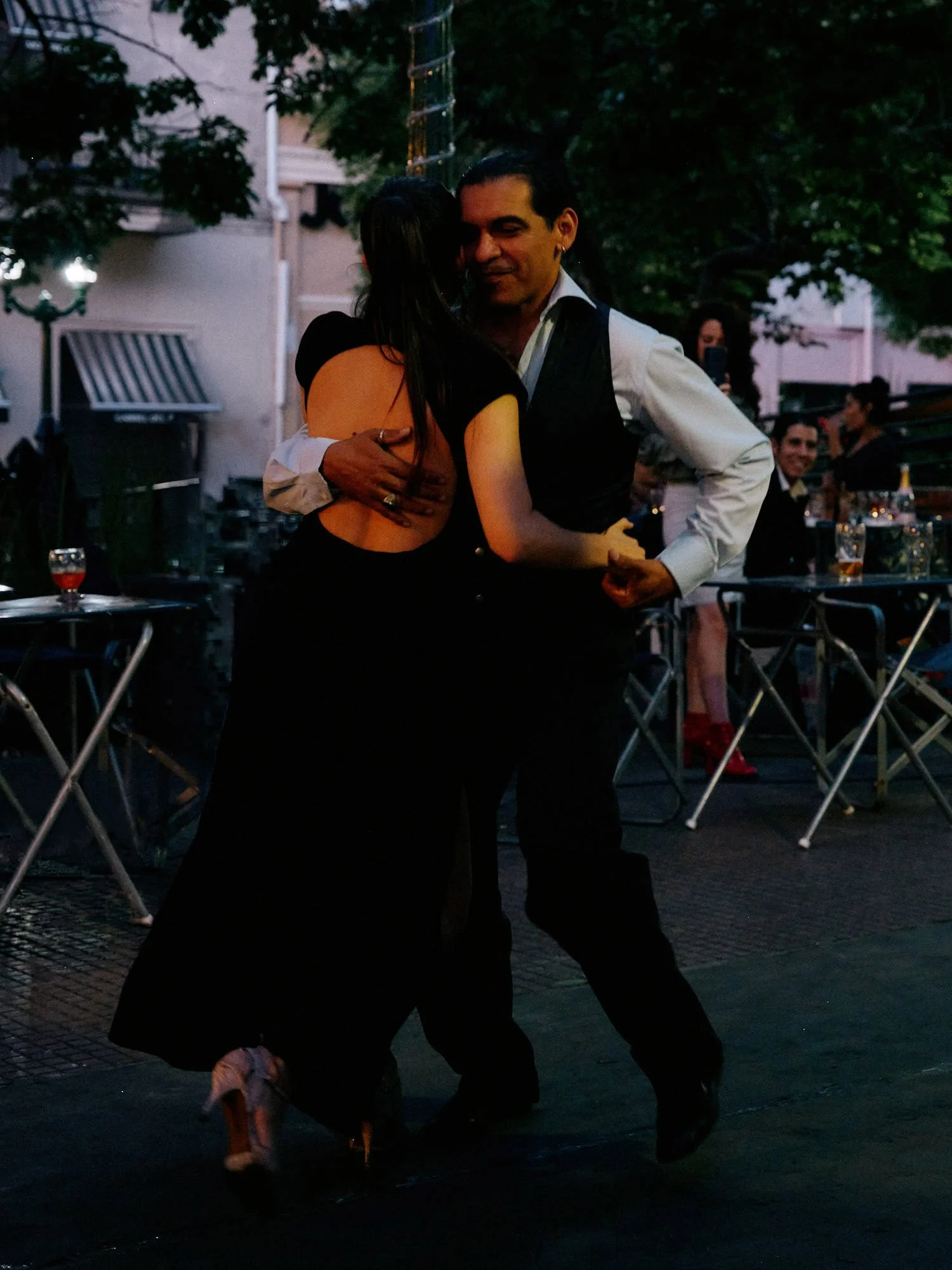
Dinner and Tango at Plaza Dorrego
At Bar Plaza Dorrego in San Telmo, I order a Quilmes beer, Parrilla La Brigada (Steak and chips). Its a good spot to watch the theatrical, sensual, performances of the tango in the square. Its a woman’s birthday party, she sips Champagne and dances the tango with several partners.
Towards the back of Dreamtigers is the poem "El Tango":
El tango crea un turbio
pasado irreal que de algún modo es cierto.
The tango creates a murky
unreal past that is somehow true.
For Borges, tango was more than music; it carried the memory of a vanished Buenos Aires. He thought it could express something poets had struggled to capture in words: “the belief that a fight may be a celebration.” Though he lived with his mum, he held a romanticised nostalgia for the early, primitive tango and milonga of his youth—an older, rougher underworld associated with the compadritos (tough guys), street corners of Palermo, guitars, and code of honor, rather than the polished, sentimental version that eventually conquered the world.
Humberto 1º 400, San Telmo.
Visit on a weekday afternoon to watch informal street tango without the heavy Sunday antiques market crowds.
Borges and the composer Astor Piazzolla found common ground in tango, collaborating on an album, El Tango, in 1965. It wasn't an entirely happy marriage: Borges favoured the older, rougher milonga, while Piazzolla was busy reinventing the genre. I love Piazzolla's music as much as I love Borges's writing.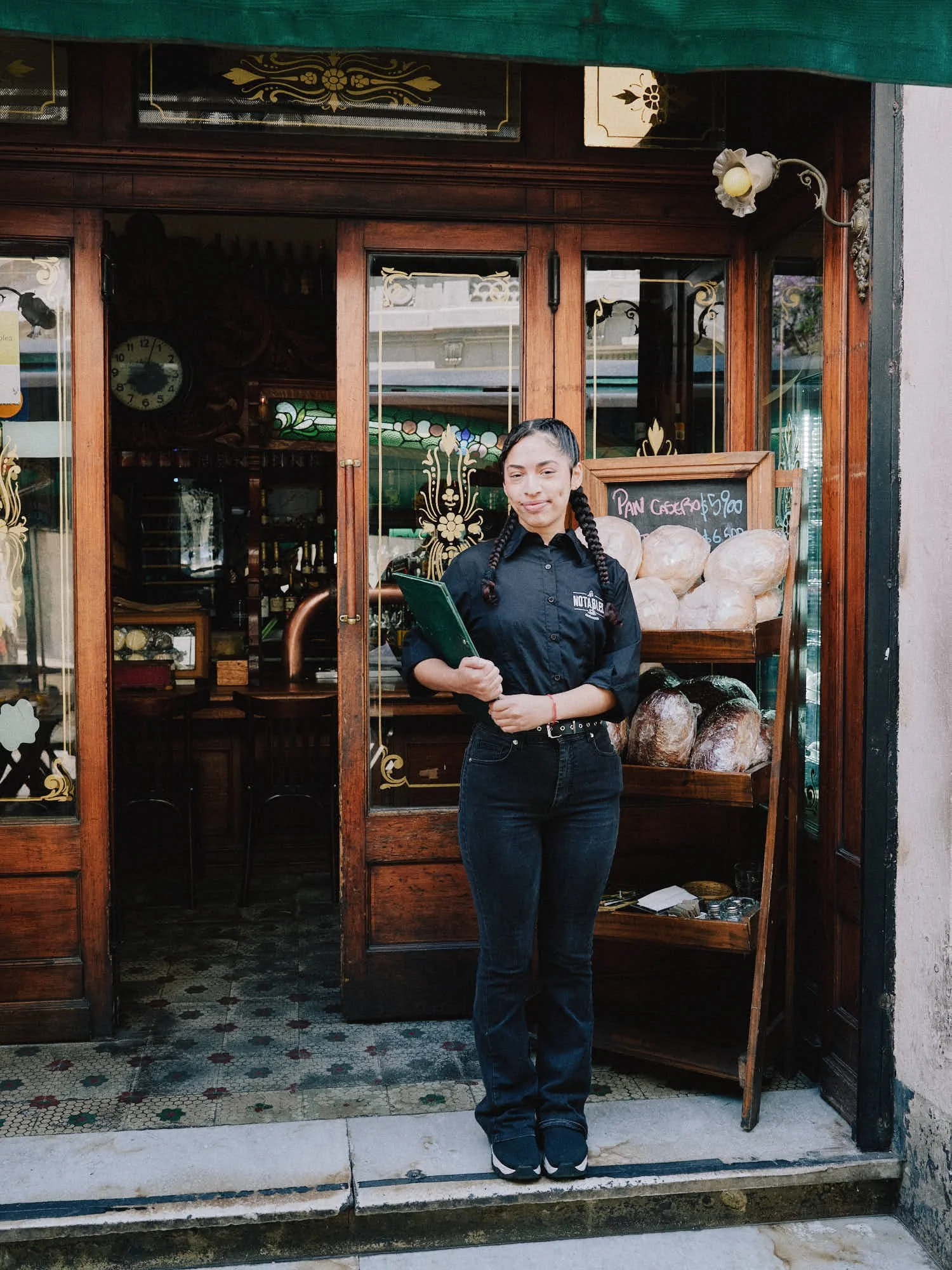
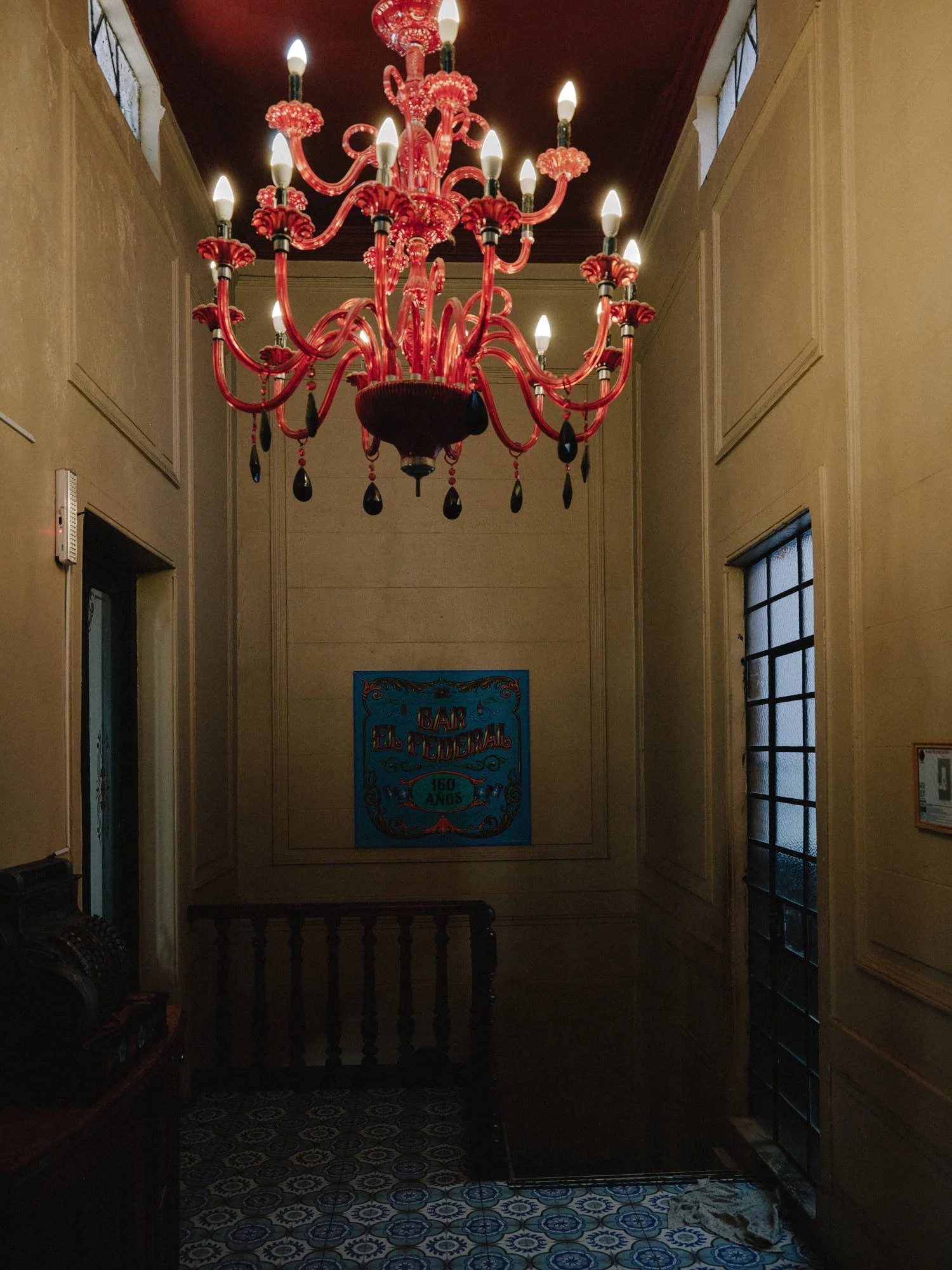
Bar El Federal
Further into San Telmo, there is a vintage and antiques fair on a Sunday, where other items on Borges list - hourglasses, and old maps - might be found.
I’m not sure if Borges was much of a drinker, but I’m drawn to Bar El Federal, where I feel like I’ve stepped into 1800s Buenos Aires. Except the Cerveza Artesanal beer is probably better. They also serve cold cut platters (picadas), and rustic Spanish potato tortillas. Bar El Federal is one of Buenos Aires most cherished, historic bars, with a distinctive lowered bar counter layout, dark, polished wood, vintage tile flooring, and walls decorated with framed antique advertisements, memorabilia, and photographs.
Carlos Calvo 99,San Telmo.
Planning your walk

Starting at Café Tortoni, the route takes you through central Buenos Aires and Recoleta before finishing in San Telmo. It's a fairly substantial day's walk if you want to take everything in, but could easily be split over two days, leaving more time for coffee, bookshops and a little wandering.

If you're choosing a base, I'd look for a hotel around Avenida de Mayo or near Café Tortoni. It's a convenient starting point for exploring the city.
Read the book:
Dreamtigers
Jorge Luis Borges
Further reading
Books about Beunos Aires